







The Complete Product Measurement Guide (2026): How to Measure Before Buying Online


By DISPASAL | Your Trusted Electronics & Home Appliance Partner
Introduction
Have you ever ordered a product online only to discover it doesn’t fit your home, your room, or even your body?
Perhaps the refrigerator couldn’t pass through your kitchen door.
Maybe your new TV was too large for your TV stand. Or you ordered a shirt that looked perfect online but didn’t fit when it arrived.
These situations happen every day, and in most cases, the product isn’t the problem—the measurements are.
One of the biggest challenges of online shopping is that you can’t physically see or test a product before buying it. That’s why understanding product dimensions is just as important as checking the price, features, or warranty.
At Dispasal, we believe informed customers make better buying decisions. That’s why we include product dimensions whenever they’re available and encourage every customer to measure their space before placing an order.
Whether you’re buying a television, refrigerator, washing machine, furniture, air conditioner, clothing, or shoes, knowing how to measure correctly can save you time, money, and unnecessary stress.
This guide will teach you everything you need to know about product measurements in a simple, practical way, helping you shop with confidence every time.
Instead of scrolling through the entire guide, jump to the section that interests you most.
- Why Product Measurements Matter
- Understanding Measurement Units
- Width vs Height vs Depth vs Length
- The Universal 5-Step Measurement Rule
- Measuring Electronics
- Measuring Kitchen Appliances
- Measuring Home Appliances
- Measuring Furniture
- Measuring Clothing
- Measuring Shoes
Why Product Measurements Matter
Buying the right product isn’t just about choosing the right brand or finding the best price. It’s also about making sure the product fits your space and meets your needs.
A few minutes spent measuring before you buy can prevent expensive mistakes after delivery.
For example:
- A television may fit your budget but not your TV stand.
- A refrigerator may fit perfectly in your kitchen but be too wide to pass through the entrance.
- A washing machine may fit your laundry area but leave no space for the door to open.
- A wardrobe may fit your bedroom floor but be too tall for the ceiling during installation.
These are common problems that many online shoppers experience, but they’re also easy to avoid.
At Dispasal, we encourage every customer to measure first and buy with confidence.
Where You’ll Notice It Most
Understanding measurements is especially important when buying:
- Televisions
- Refrigerators and Freezers
- Washing Machines
- Air Conditioners
- Furniture
- Clothing
- Shoes
The larger or more expensive the product, the more important accurate measurements become.
Is Measuring Before Buying Really Necessary?
Absolutely.
Even if you’ve purchased similar products before, dimensions can vary between brands and models. Two refrigerators with the same capacity, for example, may have different widths or heights.
Taking a few measurements before ordering can save you from unnecessary returns, delays, or installation problems.
Dispasal Tip
Never assume two products with the same size or capacity have the same dimensions.
For example, two 65-inch TVs can have different overall widths because of their bezel design, and two 10kg washing machines may differ in height or depth.
Always check the product’s actual dimensions before buying.
Understanding Measurement Units
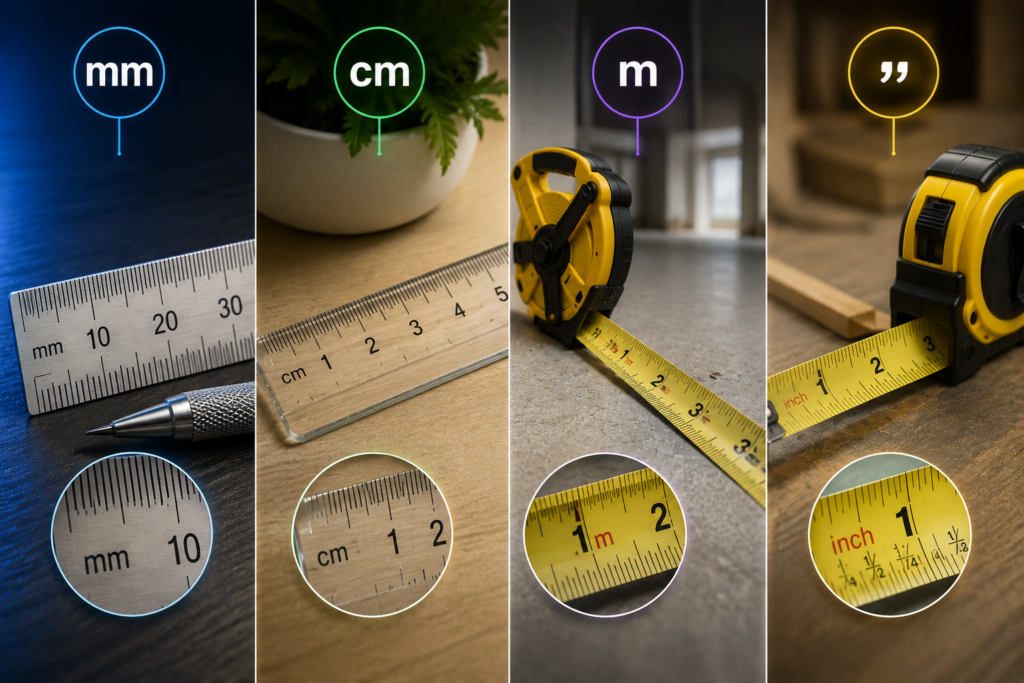
Before measuring any product, it’s important to understand the units you’ll see on product pages.
Manufacturers around the world use different measurement systems, so you may see a product described in millimetres (mm), centimetres (cm), metres (m), or inches (“).
At first, these numbers may seem confusing, but they’re actually very simple.
Millimetres (mm)
Millimetres are the smallest measurement you’ll commonly see on product specifications.
Manufacturers often use millimetres because they’re very precise.
For example:
- TV dimensions
- Refrigerator dimensions
- Washing machine dimensions
- Air conditioner dimensions
A TV may be listed as:
1452 × 834 × 75 mm
This means:
- Width = 1452 mm
- Height = 834 mm
- Depth = 75 mm
Centimetres (cm)
Centimetres are easier for most people to understand because they’re used in everyday life.
For example:
- Clothing measurements
- Furniture
- Tables
- Chairs
- Cabinets
A wardrobe may measure:
180 × 90 × 55 cm
Metres (m)
Metres are mainly used for measuring larger spaces instead of products.
For example:
- Room size
- Wall space
- Viewing distance
- Floor area
Example:
A living room may be 4 metres wide.
Inches (“)
Many electronic products are advertised in inches.
For example:
- TVs
- Computer monitors
- Laptop screens
When someone says,
“I bought a 65-inch TV.”
they’re talking about the screen size, not the TV’s width.
We’ll explain this in detail in our TV Measurement Guide.
Quick Conversion Guide
| Measurement | Equivalent |
|---|---|
| 10 mm | 1 cm |
| 100 cm | 1 metre |
| 1 metre | 1000 mm |
| 1 inch | 2.54 cm |
You don’t need to memorise these conversions, but knowing the basics will make product specifications much easier to understand.
Dispasal Tip
Don’t compare measurements using different units.
For example:
If your kitchen space is measured in centimetres, convert the refrigerator dimensions to centimetres before comparing them.
Using the same unit helps you avoid simple mistakes.
Width vs Height vs Depth vs Length
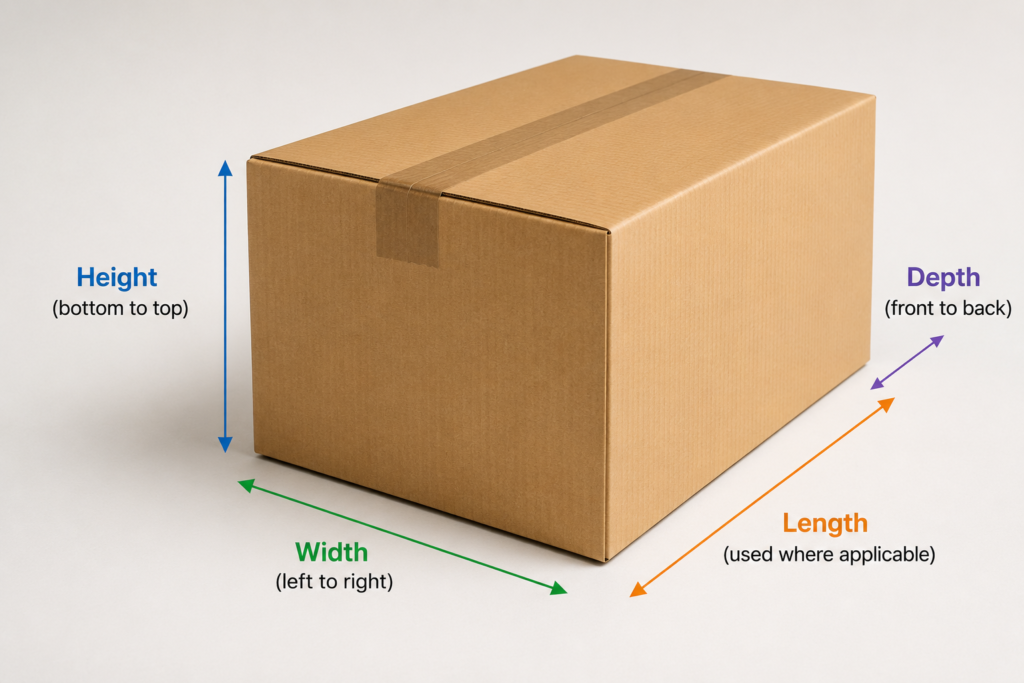
One of the most common reasons people buy the wrong product is because they misunderstand what the measurements actually mean.
Let’s make it simple.
Width
Width is the distance from left to right.
This measurement helps you know whether a product will fit into the space you’ve prepared.
You’ll often check the width when buying:
- Televisions
- Refrigerators
- Sofas
- Washing machines
Example
If your TV stand is 140 cm wide, buying a TV that’s 150 cm wide obviously won’t work.
Height
Height is the distance from bottom to top.
Height becomes especially important when:
- Installing cabinets
- Mounting televisions
- Placing refrigerators beneath overhead cupboards
- Buying wardrobes
Always remember to leave some extra space above appliances where recommended for ventilation.
Depth
Depth measures from the front of the product to the back.
Many buyers forget about depth.
This can become a problem because:
- Refrigerator doors need room to open.
- Washing machine lids or doors need clearance.
- Furniture should not block walkways.
Always measure the available depth—not just the width.
Length
Length is mainly used for products such as:
- Dining tables
- Beds
- Curtains
- Rugs
Unlike width, length usually refers to the longest side of a product.
Understanding Product Dimensions
When you see something like:
1452 × 834 × 75 mm
the order is usually:
Width × Height × Depth
This is the format used by most manufacturers.
However, it’s always a good idea to check how the manufacturer defines the measurements, especially for furniture and fashion items.
Quick Reference Table
| Measurement | Direction | Why It Matters |
|---|---|---|
| Width | Left to Right | Fits your available space |
| Height | Bottom to Top | Fits under shelves or ceilings |
| Depth | Front to Back | Allows doors and lids to open |
| Length | Longest Side | Commonly used for furniture and bedding |
Dispasal Tip
Never assume a product will fit simply because the advertised size looks similar to another product.
Always compare the actual Width × Height × Depth listed on the product page with the space available in your home.
The Universal 5-Step Measurement Rule
No matter what you’re buying—a TV, refrigerator, washing machine, wardrobe, or even a pair of shoes—the same simple process applies.
Step 1: Measure Your Available Space
Start by measuring where the product will be placed.
For example:
- Wall space for a TV
- Kitchen space for a refrigerator
- Laundry area for a washing machine
- Bedroom floor space for furniture
Never estimate. Always use a tape measure.
Step 2: Check the Product Dimensions
Next, compare your measurements with the dimensions listed on the product page.
Pay attention to:
- Width
- Height
- Depth
Don’t rely on product names like “65-inch” or “10kg” alone. They don’t tell you the product’s physical size.
Step 3: Leave Extra Clearance
Many products need additional space around them.
Examples include:
- Refrigerators for ventilation.
- Washing machines for hoses and door clearance.
- TVs for cable connections.
- Furniture for comfortable movement around the room.
A perfect fit isn’t always the best fit.
Step 4: Measure the Delivery Path
This is the step many buyers forget.
Ask yourself:
- Will it fit through the front door?
- Can it pass through the hallway?
- Will it fit in the lift?
- Can it go upstairs?
- Will it fit through the bedroom or kitchen door?
The product may fit the room but never make it inside if the delivery path is too narrow.
Step 5: Compare Everything Before Ordering
Before clicking Buy Now, do one final comparison.
✔ Your available space
✔ Product dimensions
✔ Clearance space
✔ Delivery path
If everything checks out, you can order with confidence.
Dispasal Tip
Measure twice. Buy once.
Spending five minutes with a tape measure can save you from expensive mistakes, delayed installations, and unnecessary returns.
Instead of scrolling through the entire guide, jump to the section that interests you most.
- How to Measure Televisions
- How to Measure Refrigerators and Freezers
- How to Measure Washing Machines
- How to Measure Air Conditioners
- How to Measure Furniture
- How to Measure Clothing and Shoes
Measuring Electronics Before Buying
Electronics come in many shapes and sizes, and while their features are important, their physical dimensions are just as important.
Whether you’re buying a television for your living room or a monitor for your office, taking a few measurements beforehand can save you from installation problems and disappointment.
The most common mistakes buyers make include:
- Buying a TV that’s too large for the wall or TV stand.
- Purchasing a monitor that doesn’t fit on the desk.
- Forgetting to leave space for cables and ventilation.
Let’s look at each one.
Instead of scrolling through the entire guide, jump to the section that interests you most.
- How to Measure Televisions
- How to Measure a Computer Monitor
- How to Measure a Refrigerator
- How to Measure a Chest Freeze
How to Measure a Television Before Buying
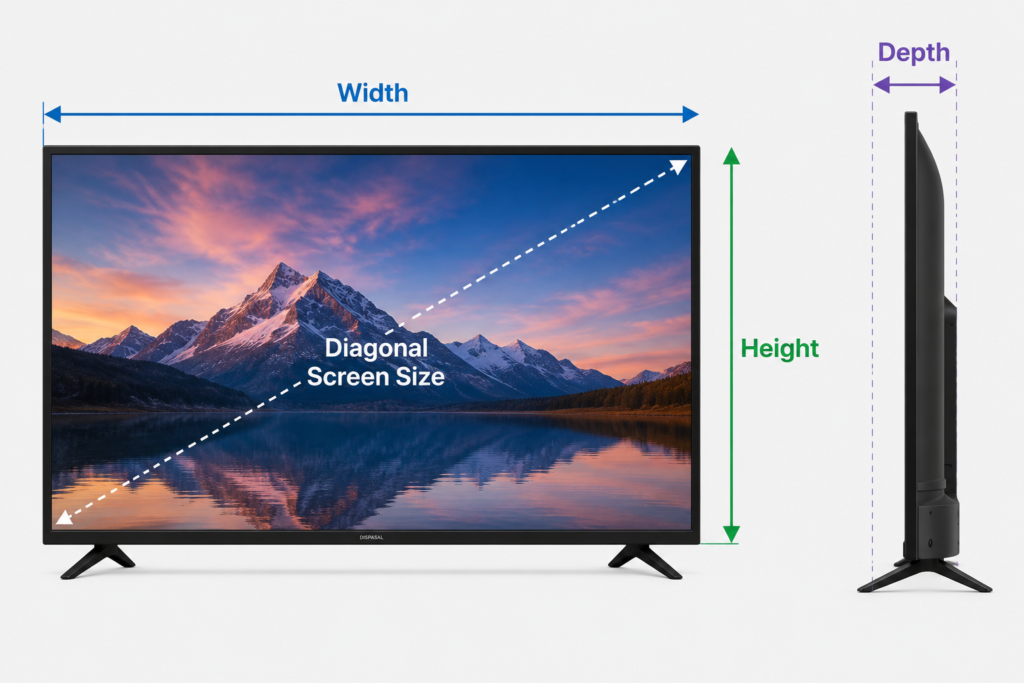
When shopping for a television, many people focus only on the screen size.
For example, they may decide to buy a 65-inch TV without checking its actual dimensions.
However, the advertised screen size is only the diagonal measurement of the display. It doesn’t tell you how wide, tall, or deep the television is.
Before buying a TV, you should always check:
- Screen Size
- Width
- Height
- Depth
These measurements will help you determine whether the TV will fit your room, TV stand, or wall.
What Should You Measure?
Before ordering a television, measure:
- The width of your TV stand.
- The available wall space if you plan to mount it.
- The viewing distance between the TV and your seating area.
- The space around the TV for cables and ventilation.
Taking these measurements beforehand makes installation much easier.
Common TV Measurement Mistakes
Avoid these common mistakes:
- Assuming a 65-inch TV is 65 inches wide.
- Buying a TV that’s wider than the TV stand.
- Forgetting to measure wall space.
- Mounting the TV too high or too low.
- Ignoring cable clearance behind the TV.
Dispasal Tip
Always compare your available space with the actual product dimensions, not just the advertised screen size.
How to Measure a Computer Monitor Before Buying
Buying a computer monitor is similar to buying a television, but there are a few additional things to consider.
Besides fitting your desk, the monitor should also provide a comfortable viewing experience for work, gaming, or studying.
What Should You Measure?
Before buying a monitor, measure:
- Your desk width.
- Desk depth.
- Available height if shelves are above the desk.
- Viewing distance from your chair.
If you’re planning to use two monitors, make sure your desk has enough space for both screens.
Monitor Screen Size vs Overall Size
Like televisions, monitor sizes are measured diagonally.
For example:
- 24-inch Monitor
- 27-inch Monitor
- 32-inch Monitor
However, two monitors with the same screen size can have different overall dimensions depending on the bezel thickness and stand design.
That’s why checking the actual width and height is always recommended.
Monitor Placement Tips
For a comfortable viewing experience:
- Position the top of the monitor at or slightly below eye level.
- Sit about an arm’s length away from the screen.
- Leave enough space behind the monitor for cables and ventilation.
- Ensure the monitor stand fits comfortably on your desk.
These simple adjustments can improve comfort, especially during long hours of work or study.
Dispasal Tip
If you’re buying a monitor for a small desk, don’t focus only on the screen size. Also check the stand dimensions, as some monitor stands take up more desk space than others.
Quick Checklist for Electronics
Before buying a TV or monitor, ask yourself:
- Have I measured the available space?
- Have I checked the product’s width, height, and depth?
- Will there be enough room for cables?
- Is the viewing distance comfortable?
- Will the product fit through the delivery route if it’s a large TV?
If the answer is yes to all these questions, you’re ready to buy with confidence.
Measuring Kitchen Appliances Before Buying
Kitchen appliances are some of the most important items in every home. They also tend to be among the largest and most expensive purchases, which makes accurate measurements even more important.
Unlike smaller household items, kitchen appliances need enough space not only to fit into your kitchen but also to operate safely and efficiently.
Before buying any kitchen appliance, always measure:
- The available installation space.
- The product dimensions.
- The delivery path into your home.
- The clearance needed for ventilation and opening doors.
A few extra minutes with a tape measure can save you from costly installation problems.
Instead of scrolling through the entire guide, jump to the section that interests you most.
How to Measure a Refrigerator Before Buying
A refrigerator may fit perfectly in your kitchen on paper, but that doesn’t always mean it will fit comfortably in real life.
Many buyers focus only on the available floor space and forget to consider ventilation, door clearance, and the path the refrigerator must take to reach the kitchen.
What Should You Measure?
Before buying a refrigerator, measure:
- The available width.
- The available height.
- The available depth.
- Nearby cabinets or countertops.
- The doorway leading into your kitchen.
- Hallways, staircases, or lifts if applicable.
Don’t Forget Door Clearance
One of the most common mistakes is forgetting that refrigerator doors need space to open fully.
If the appliance is installed too close to a wall or cabinet, the doors may not open wide enough to remove shelves or drawers comfortably.
Always leave enough clearance around the sides and front of the refrigerator according to the manufacturer’s recommendations.
Allow Space for Ventilation
Refrigerators generate heat while operating.
For efficient cooling and a longer lifespan, leave adequate space around the appliance for proper airflow.
The exact clearance varies by model, so always follow the manufacturer’s installation instructions.
Dispasal Tip
A refrigerator that fits tightly into a cabinet may look neat, but without proper ventilation it can reduce cooling efficiency and shorten the appliance’s lifespan.
How to Measure a Chest Freezer Before Buying
Chest freezers are wider than most refrigerators and require enough room for the lid to open completely.
Before purchasing one, measure:
- Width
- Height
- Depth
- Overhead clearance for the lid
- Space around the freezer for ventilation
If the freezer will be placed in a store, warehouse, or utility room, make sure there is enough space for people to move around it comfortably.
Common Chest Freezer Mistakes
Avoid placing a chest freezer:
- Directly against a wall.
- Under low shelves that block the lid.
- In areas with poor ventilation.
- Where it blocks walkways or emergency exits.
How to Measure an Upright Freezer
An upright freezer is measured much like a refrigerator.
Check:
- Width
- Height
- Depth
- Door opening clearance
- Ventilation space
- Delivery path
If the freezer has reversible doors, confirm the direction that best suits your room before installation.
How to Measure a Microwave Oven
Microwaves are compact, but they still need adequate space to operate safely.
Before buying, measure:
- Countertop width
- Countertop depth
- Available height
- Clearance around the microwave for ventilation
If you’re placing it inside a cabinet, ensure the cabinet is designed for that purpose and provides enough airflow.
How to Measure an Air Fryer
Air fryers have become a popular kitchen appliance, but many people forget that they need additional space when the basket is removed.
Before buying, check:
- Countertop width
- Countertop depth
- Height beneath overhead cabinets
- Space in front to pull out the basket fully
Also leave room around the appliance for proper airflow during cooking.
How to Measure a Cooker or Oven
Whether you’re buying a freestanding cooker or a built-in oven, accurate measurements are essential.
Measure:
- Width of the installation space
- Height (for built-in models)
- Depth
- Door opening clearance
- Nearby cabinets and countertops
If you’re replacing an old cooker, don’t assume the new one will have the same dimensions. Always compare the manufacturer’s specifications before purchasing.
Quick Checklist for Kitchen Appliances
Before placing your order, ask yourself:
- Have I measured the installation space?
- Have I checked the product’s width, height, and depth?
- Is there enough ventilation space?
- Can the doors or lids open fully?
- Will the appliance fit through my entrance, hallway, and kitchen door?
- Have I compared my measurements with the product specifications?
If you can answer yes to all these questions, you’re much less likely to encounter installation problems.
Dispasal Tip
Don’t just measure where the appliance will stay—measure the entire journey to get it there.
Many delivery delays happen because an appliance fits the kitchen perfectly but cannot pass through a doorway, staircase, or narrow hallway.
Measuring Home Appliances Before Buying
Home appliances are designed to make everyday life easier, but they also require proper planning before installation.
Unlike smaller household items, many home appliances need enough room for operation, ventilation, maintenance, and safe access. Buying the correct size ensures the appliance works efficiently and fits comfortably into your home.
Before buying any home appliance, always measure:
- The available installation space.
- The product’s width, height, and depth.
- The space required for doors, lids, or water bottles.
- The clearance needed for ventilation or maintenance.
Taking these simple measurements before ordering can prevent unnecessary installation problems.
Instead of scrolling through the entire guide, jump to the section that interests you most.
- How to Measure a Washing Machine
- How to Measure an Air Conditioner
- How to Measure a Water Dispenser
- How to Measure a Vacuum Cleaner
How to Measure a Washing Machine Before Buying
A washing machine may appear to fit perfectly into your laundry area, but many buyers forget to leave room for the door, water hoses, drainage pipes, and ventilation.
Before purchasing, measure:
- Available width
- Available height
- Available depth
- Space behind the machine for water hoses
- Front clearance for opening the door (front-load models)
- Top clearance for opening the lid (top-load models)
Also make sure the floor is level and strong enough to support the appliance when fully loaded.
Front Load vs Top Load
The type of washing machine you choose also affects the amount of space you’ll need.
Front Load Washing Machine
Requires enough space in front for the door to open fully.
Best suited for:
- Under-counter installation
- Laundry cabinets
- Modern utility rooms
Top Load Washing Machine
Requires enough space above the appliance to lift the lid comfortably.
Best suited for:
- Open laundry spaces
- Homes with limited front clearance
Common Washing Machine Mistakes
Avoid these common mistakes:
- Placing the machine too close to the wall.
- Forgetting space for water hoses.
- Not allowing room to open the door or lid.
- Installing on an uneven floor.
- Ignoring ventilation around the appliance.
Dispasal Tip
Always leave enough space behind the washing machine for the water inlet, drainage hose, and power cable. This also makes future maintenance much easier.
How to Measure an Air Conditioner Before Buying
Air conditioners don’t just need enough wall space—they also require proper positioning for efficient cooling and easy servicing.
Before buying a split air conditioner, measure:
- The available wall width.
- The available wall height.
- The distance from the ceiling.
- Space beside curtains, cupboards, or shelves.
The indoor unit should be installed where air can circulate freely throughout the room.
Don’t Forget the Outdoor Unit
If you’re buying a split air conditioner, remember that it has two parts:
- Indoor Unit
- Outdoor Unit
The outdoor unit also requires a safe installation location with adequate airflow and easy access for maintenance.
Window Air Conditioners
For window air conditioners, measure:
- Window opening width
- Window opening height
- Wall thickness (if required)
The unit should fit securely without leaving large gaps around the edges.
Dispasal Tip
The right cooling capacity is just as important as the physical size. Choosing an air conditioner that’s too small or too large for your room can reduce efficiency and increase electricity consumption.
Related Guide: How to Choose the Right Air Conditioner for Your Room
How to Measure a Water Dispenser Before Buying
A water dispenser doesn’t take up much floor space, but many people forget to allow enough room above the unit for replacing the water bottle.
Before purchasing, measure:
- Width
- Height
- Depth
- Additional overhead clearance for lifting the bottle
- Space around the dispenser for comfortable use
If you’re placing it beneath overhead cabinets, make sure there’s enough room to change the bottle without difficulty.
How to Measure a Vacuum Cleaner Before Buying
Vacuum cleaners are relatively compact, but it’s still worth checking where you’ll store them.
Before buying, consider:
- Storage height
- Storage width
- Available floor space
- Cable or charging station location (for cordless models)
If you have limited storage, look for a compact model that’s easy to store after use.
Quick Checklist for Home Appliances
Before placing your order, ask yourself:
- Have I measured the available installation space?
- Have I checked the product’s width, height, and depth?
- Is there enough space for doors, lids, or moving parts?
- Have I allowed room for hoses, cables, and ventilation?
- Can the appliance be installed and serviced easily?
- Will it fit through the delivery route?
If the answer is yes, you’re ready to buy with confidence.
Dispasal Tip
Think beyond installation day.
Your appliance should not only fit today—it should also leave enough space for cleaning, maintenance, and everyday use over the years.
Measuring Furniture Before Buying
Furniture plays a major role in the comfort and appearance of your home. However, even the most beautiful piece of furniture can become a problem if it doesn’t fit your room or cannot be delivered into your home.
Many people measure only the floor space where the furniture will be placed and forget about the journey it must take to get there. Narrow doorways, staircases, hallways, and lifts can all create unexpected challenges.
Before buying furniture, always measure:
- The available floor space.
- The furniture’s dimensions.
- The delivery route.
- The space needed to move around the furniture comfortably.
Planning ahead will help you avoid unnecessary stress during delivery and installation.
Instead of scrolling through the entire guide, jump to the section that interests you most.
- How to Measure a Sofa
- How to Measure a TV Stand
- How to Measure a Dining Table
- How to Measure a Wardrobe
How to Measure a Sofa Before Buying
A sofa is often the largest piece of furniture in a living room, so choosing the right size is essential.
Before buying, measure:
- The available wall space.
- The available floor space.
- Doorways and hallways.
- Staircases or lifts if applicable.
Remember that a sofa should fit comfortably within the room while leaving enough space for people to walk around it.
Leave Comfortable Walking Space
After placing your sofa, there should still be enough room for everyday movement.
Avoid placing large sofas where they block:
- Walkways
- Doors
- Windows
- Cabinets
A well-sized sofa makes a room feel comfortable rather than crowded.
Dispasal Tip
Use masking tape on the floor to mark the sofa’s dimensions before buying. This simple trick helps you visualise how much space it will occupy.
How to Measure a TV Stand Before Buying
Many buyers focus only on the television and forget that the TV stand also needs to be the right size.
Before buying a TV stand, measure:
- The available wall width.
- The available floor space.
- The width of your television.
As a general guide, the TV stand should be wider than the television for better stability and appearance.
Also check that the stand has enough space for devices such as:
- Soundbars
- Game consoles
- Streaming devices
- Décor items
How to Measure a Dining Table Before Buying
A dining table should not only fit your dining area but also leave enough room for people to sit comfortably and move their chairs.
Before buying, measure:
- Room width
- Room length
- Table dimensions
- Chair clearance
Leave enough space around the table so chairs can be pulled out without hitting walls or other furniture.
How to Measure a Bed Before Buying
A bed is usually the largest item in a bedroom, so accurate measurements are essential.
Before buying, measure:
- Bedroom length
- Bedroom width
- Bed dimensions
- Space for bedside tables
- Walking space around the bed
The goal is to create a comfortable bedroom—not one where the bed occupies almost every available space.
How to Measure a Wardrobe Before Buying
Wardrobes require more planning than many people realise.
Before buying, check:
- Available width
- Ceiling height
- Depth
- Door opening space
Also make sure the wardrobe can be carried through your home’s entrance before purchase.
Don’t Forget Door Swing
If your wardrobe has hinged doors, you’ll need enough space in front to open them fully.
Sliding-door wardrobes require less front clearance but still need enough side space for comfortable access.
Office Furniture
When buying office furniture, consider both comfort and functionality.
Measure:
- Desk width
- Desk depth
- Available chair movement
- Height beneath shelves
- Space for computer equipment
If you’re buying a desk for a computer setup, remember to allow space for monitors, printers, and other accessories.
The Delivery Route Matters Too
Even if your furniture fits perfectly inside the room, it still has to get there.
Before placing your order, measure:
- Front door width
- Internal doors
- Hallways
- Staircases
- Lift dimensions (if applicable)
Large furniture often requires careful planning during delivery.
Quick Checklist for Furniture
Before buying furniture, ask yourself:
- Have I measured the available floor space?
- Have I checked the furniture dimensions?
- Is there enough walking space?
- Can the doors and drawers open fully?
- Will the furniture fit through the delivery route?
- Will it complement the size of the room?
If you’ve answered yes to these questions, you’re ready to buy with confidence.
Dispasal Tip
A piece of furniture should fit your lifestyle, not just your room.
Always think about how you’ll use the space every day. A slightly smaller piece of furniture that allows comfortable movement is often a better choice than a larger one that makes the room feel cramped.
Measuring Clothing Before Buying
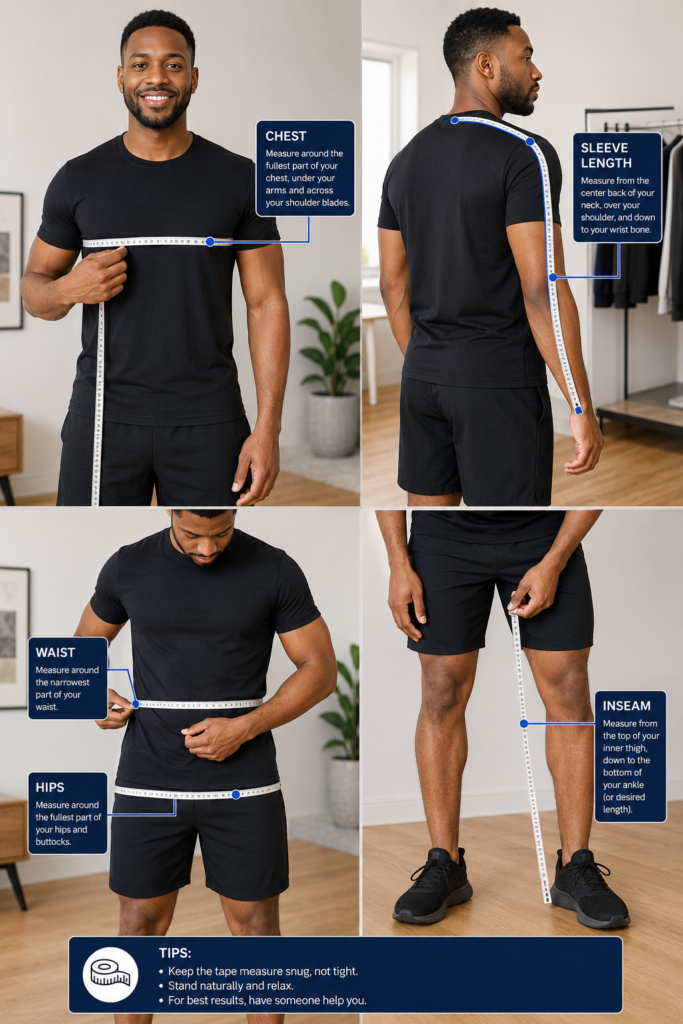
Buying clothing online is convenient, but it can also be frustrating if the size isn’t right.
One of the biggest misconceptions is that a Medium, Large, or XL from one brand will always fit the same as another. In reality, clothing sizes can vary between manufacturers, countries, and even different collections from the same brand.
Instead of relying only on the size label, compare your body measurements with the product’s size chart whenever one is available.
What Should You Measure?
Depending on the type of clothing, you may need to measure:
- Chest
- Waist
- Hips
- Shoulder Width
- Sleeve Length
- Inseam (for trousers)
- Overall Length
Using a soft measuring tape will give the most accurate results.
Understanding Size Charts
Many clothing brands provide a size chart showing the body measurements that correspond to each size.
For example:
| Size | Chest | Waist | Hips |
|---|---|---|---|
| Small (S) | 86–91 cm | 71–76 cm | 89–94 cm |
| Medium (M) | 92–99 cm | 77–84 cm | 95–102 cm |
| Large (L) | 100–107 cm | 85–92 cm | 103–110 cm |
| Extra Large (XL) | 108–115 cm | 93–100 cm | 111–118 cm |
Note: These measurements are examples only. Always use the size chart provided for the specific product or brand.
Tips for Buying Clothing Online
- Measure yourself before ordering.
- Compare your measurements with the product’s size chart.
- Don’t rely only on S, M, L, or XL labels.
- Read the product description for information about the fit (Slim Fit, Regular Fit, Oversized, etc.).
- If you’re between two sizes, consider the fabric and fit before deciding.
Dispasal Tip
If a size chart is available, trust your measurements more than your usual clothing size. Different brands may use different sizing standards.
Measuring Shoes Before Buying
Finding the right shoe size isn’t just about comfort—it’s also important for proper foot support.
Many buyers choose the same shoe size for every brand, but shoe sizing can vary depending on the manufacturer and the style of the shoe.
Measuring your feet before buying online can help you make a better choice.
How to Measure Your Feet
For the most accurate measurement:
- Place a sheet of paper on a flat floor.
- Stand on the paper while wearing the type of socks you would normally use with the shoes.
- Mark the back of your heel and the tip of your longest toe.
- Measure the distance between the two marks.
- Measure both feet and use the larger measurement if there is a slight difference.
This measurement can then be compared with the brand’s shoe size chart.
Don’t Forget Foot Width
Some people focus only on foot length, but foot width is just as important.
If you have wide or narrow feet, check whether the manufacturer provides width information, especially for formal shoes, safety boots, and sports shoes.
Common Shoe Buying Mistakes
Avoid these common mistakes:
- Ordering based only on your usual shoe size.
- Ignoring the manufacturer’s size chart.
- Forgetting that feet can vary slightly in size.
- Choosing shoes that are too tight with the expectation that they will “stretch.”
A properly fitting shoe should feel comfortable from the start.
Dispasal Tip
Measure your feet later in the day if possible. Feet naturally expand slightly after walking and standing, giving you a more realistic measurement.
Universal Measurement Checklist
No matter what you’re buying, this simple checklist can help you avoid common measurement mistakes.
Before placing your order, ask yourself:
✔ Have I measured the available space?
✔ Have I checked the product’s actual dimensions?
✔ Am I comparing the same measurement units (mm, cm, inches, etc.)?
✔ Have I allowed enough clearance for doors, lids, ventilation, or movement?
✔ Will the product fit through the delivery route?
✔ Have I compared my measurements with the product specifications?
✔ Have I read the installation or sizing information provided by the manufacturer?
If you’ve answered yes to these questions, you’re ready to buy with confidence.
Final Thoughts
Buying online offers convenience and access to a wider range of products, but it also means you can’t physically inspect an item before placing your order.
That’s why taking accurate measurements is one of the smartest things you can do before making a purchase.
Whether you’re buying a television, refrigerator, washing machine, air conditioner, furniture, clothing, or shoes, a few minutes spent measuring can save you from unnecessary stress, costly returns, and installation problems.
At Dispasal, we’re committed to helping you make informed buying decisions. That’s why we include product dimensions whenever they’re available and provide practical buying guides to help you choose the right product with confidence.
Remember our simple rule:
Measure First. Buy With Confidence.
Continue Learning
Expand your knowledge with these helpful guides:
- The Complete TV Buying Guide for Nigerian Homes
- How to Choose the Right Refrigerator
- How to Choose the Right Washing Machine
- How to Choose the Right Air Conditioner

Televisions
Dispasal offers 100% original TVs from trusted brands
Need Help Choosing?
Still unsure about the right size or dimensions?
Our product specialists are happy to help. Tell us what you’re buying and the space available, and we’ll guide you towards products that are suitable for your home and budget.
WhatsApp / call 09164425471
Frequently Asked Questions
Why are product dimensions important when buying online?
Product dimensions help you confirm that an item will fit your available space, pass through doorways, and operate comfortably once installed.
Are product dimensions always the same for similar products?
No. Two products with similar capacities or screen sizes can have different physical dimensions depending on the manufacturer and design.
Should I measure my space before or after choosing a product?
Always measure your available space first, then compare it with the product specifications before placing your order.
What if I can’t find the dimensions on a product page?
If the dimensions aren’t listed, contact the seller before buying. At Dispasal, we aim to include product dimensions whenever they’re available from the manufacturer.
What measuring tool should I use?
A tape measure is usually the best option because it’s flexible, easy to use, and suitable for measuring both products and spaces.
One thought on “The Complete Product Measurement Guide (2026): How to Measure Before Buying Online”