







The Complete Refrigerator & Freezer Buying Guide for Nigerian Homes (2026): Everything You Need to Know Before You Buy

By DISPASAL | Your Trusted Home Appliance Partner
A refrigerator or freezer is not a small purchase. For most Nigerian households, it is one of the most expensive appliances in the home — and one that runs every single day, 24 hours a day, for seven to ten years or more.
Get it right and it rewards you with cold food, preserved ingredients, less waste, and quiet, efficient operation that barely affects your electricity bill. Get it wrong and you are dealing with food spoiling during power cuts, a compressor that trips your generator every time it starts, an appliance that demands manual defrosting every few weeks, or worst of all — a unit that breaks down inside its first year with no warranty to protect you.
At DISPASAL, we have helped hundreds of customers in Suleja, Abuja, and surrounding areas choose the right fridge or freezer for their home, family size, and power situation. This guide puts everything we know — the technology, the sizes, the brand truths, the Nigerian-specific considerations — into one place, so your decision is an informed one before you spend a single naira.
Part 1: The Most Important Decision — Cooling Technology
Most buyers walk into a store and immediately ask about brand, size, and price. Those are important questions — but they are the wrong starting point.
The most important question is: how does this appliance cool?
The cooling system determines how fast the fridge freezes, how long it retains cold when power goes out, whether you will be manually defrosting every month, and how well the fridge performs in the Nigerian climate. There are two fundamental cooling systems — and understanding both will immediately make you a smarter buyer.
System 1: Direct Cooling (Static Cooling)
Direct cooling is the original and still most widely used refrigeration system in Nigeria, found in most single-door fridges, chest freezers, and many standing freezers.
How it works:
A single evaporator coil — the cooling element — is positioned directly inside the freezer compartment. It chills the air, and that cold air spreads through the interior by natural convection: cold air naturally sinks, warm air rises, and circulation happens on its own without any fan assistance.
Because cold is applied directly and intensely in one location, direct cooling systems freeze food and water very quickly. This is why chest freezers — all of which use direct cooling — turn water to solid ice in a matter of hours.
The trade-off is frost. Because the evaporator coil sits exposed inside the compartment and there is no mechanism to prevent moisture from settling on it, ice accumulates on the walls and coils over time. This requires periodic manual defrosting — usually every four to six weeks depending on usage — where you switch the unit off and allow the ice to melt.
The zinc evaporator plate vs the plastic evaporator:
Inside direct cooling refrigerators, there are two types of evaporator materials, and they behave differently in ways that matter for Nigerian users:
Zinc (aluminium alloy) evaporator plates are found in most chest freezers and single-door fridges in the budget-to-mid range. Zinc plates conduct cold extremely aggressively — they get intensely cold very fast. This is why a chest freezer with a zinc plate can freeze a full load of fish within hours. However, because the zinc plate itself loses temperature quickly once power is cut, cold retention during blackouts is shorter.
Plastic (polyurethane-insulated) evaporators are found in some double-door fridges and higher-grade direct cooling units. They freeze slightly more slowly than zinc, but the plastic housing retains cold significantly longer after power cuts. For households with frequent, extended blackouts, plastic evaporator models perform better during those off-periods.
Who direct cooling is best for:
- Households or businesses that need fast, aggressive freezing
- Areas with very frequent power cuts where speed of re-freezing when power returns matters
- Users running chest freezers for fish, meat, or business stock
- Budget-conscious buyers who do not mind occasional manual defrosting
System 2: Air Cooling (No-Frost / Frost-Free)
Air cooling — also called No-Frost or Frost-Free — is the more modern and increasingly popular technology, found in most double-door fridges, premium models, and inverter refrigerators.
How it works:
Instead of placing the evaporator coil directly inside the storage compartment, it is hidden behind a panel — usually at the back or top of the freezer section. A motorized fan then blows the chilled air from the coil evenly throughout the entire interior. Additionally, a small heating element activates automatically on a timed cycle every few hours, gently warming the hidden coil just enough to melt any frost that forms before it can build up into ice. The melted water drains away through a tube to an evaporation tray near the compressor.
The result: no frost ever accumulates inside the fridge. No manual defrosting. Ever.
Air cooling also distributes temperature far more evenly across every shelf and every corner. There are no cold spots near the coils and warm spots near the door — the entire interior maintains a consistent, accurate temperature throughout.
The cold retention advantage — a clarification:
There is a common belief that direct cooling retains cold longer than no-frost during blackouts because of the ice buildup on the coils. This is partially true for chest freezers with large masses of frozen food — the frozen food itself acts as a thermal buffer. However, in a well-insulated no-frost double-door fridge, modern models retain safe temperatures for 8 to 12 hours after power cuts due to superior insulation in the cabinet walls — not the cooling system itself. The key to cold retention during blackouts is insulation quality and how full the fridge is, not cooling system type.
Who air cooling is best for:
- Families who open the fridge frequently throughout the day
- Anyone who wants zero maintenance and no manual defrosting
- Users who store a wide variety of foods across multiple shelves
- Households with good generator or inverter backup that bridges power cuts
- Anyone who values food freshness — no-frost systems preserve moisture in food better than direct cooling
Direct Cooling vs Air Cooling (The Honest Comparison)
| Factor | Direct Cooling | Air Cooling (No-Frost) |
|---|---|---|
| Freezing speed | Faster — intense, direct cold | Moderate — fan-distributed |
| Frost formation | Yes — manual defrosting required | No — automatic prevention |
| Temperature consistency | Less even — colder near coils | Excellent — even throughout |
| Cold retention (blackout) | Good if well-packed | Good if well-insulated |
| Food moisture preservation | Better — less air movement | Slightly drier air inside |
| Maintenance | Higher — regular defrosting | Minimal |
| Upfront cost | Lower | Higher |
| Energy use | Lower | Slightly higher due to fan |
| Best for | Chest freezers, fast freezing | Family fridges, convenience |
Bottom line: For a chest freezer or a household prioritizing aggressive freezing power at lower cost — direct cooling is the right choice. For a family refrigerator where convenience, even cooling, and food freshness across multiple shelves matter most — no-frost air cooling is worth the investment.
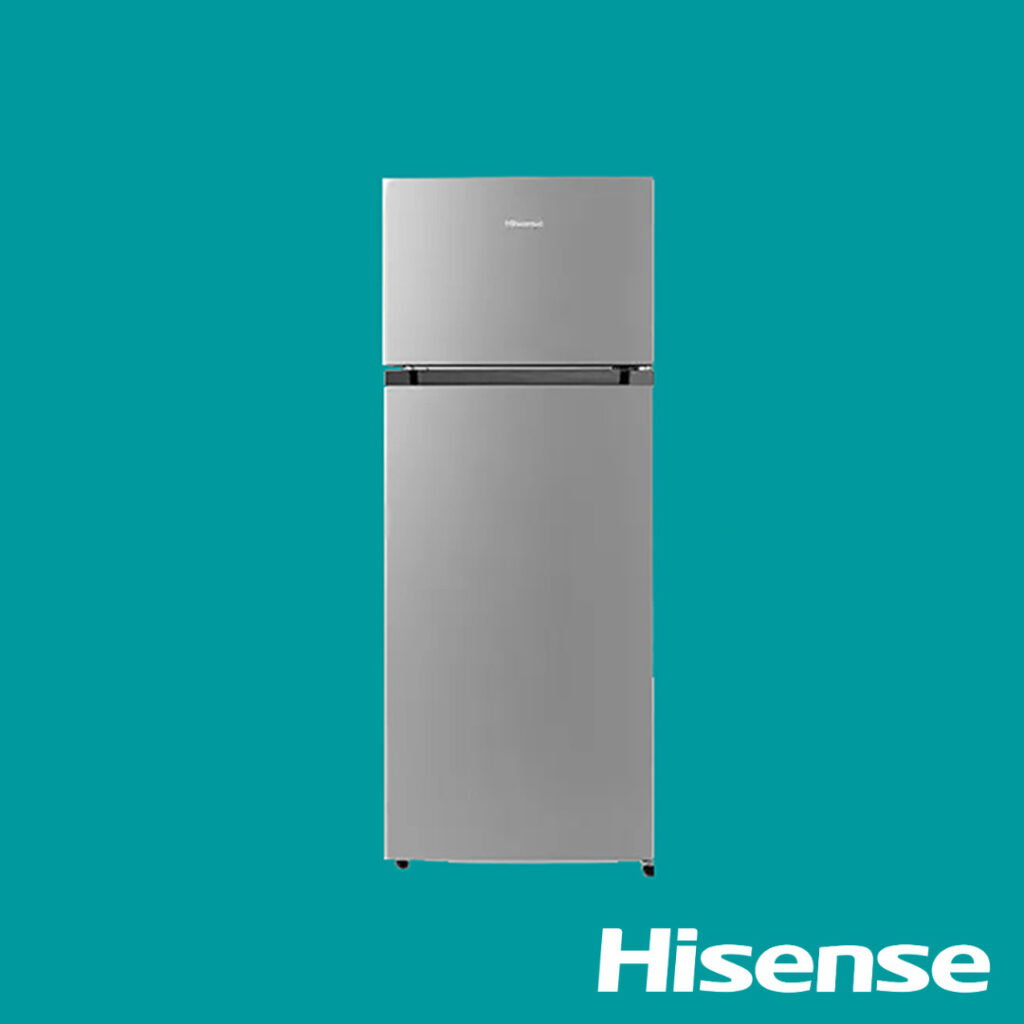
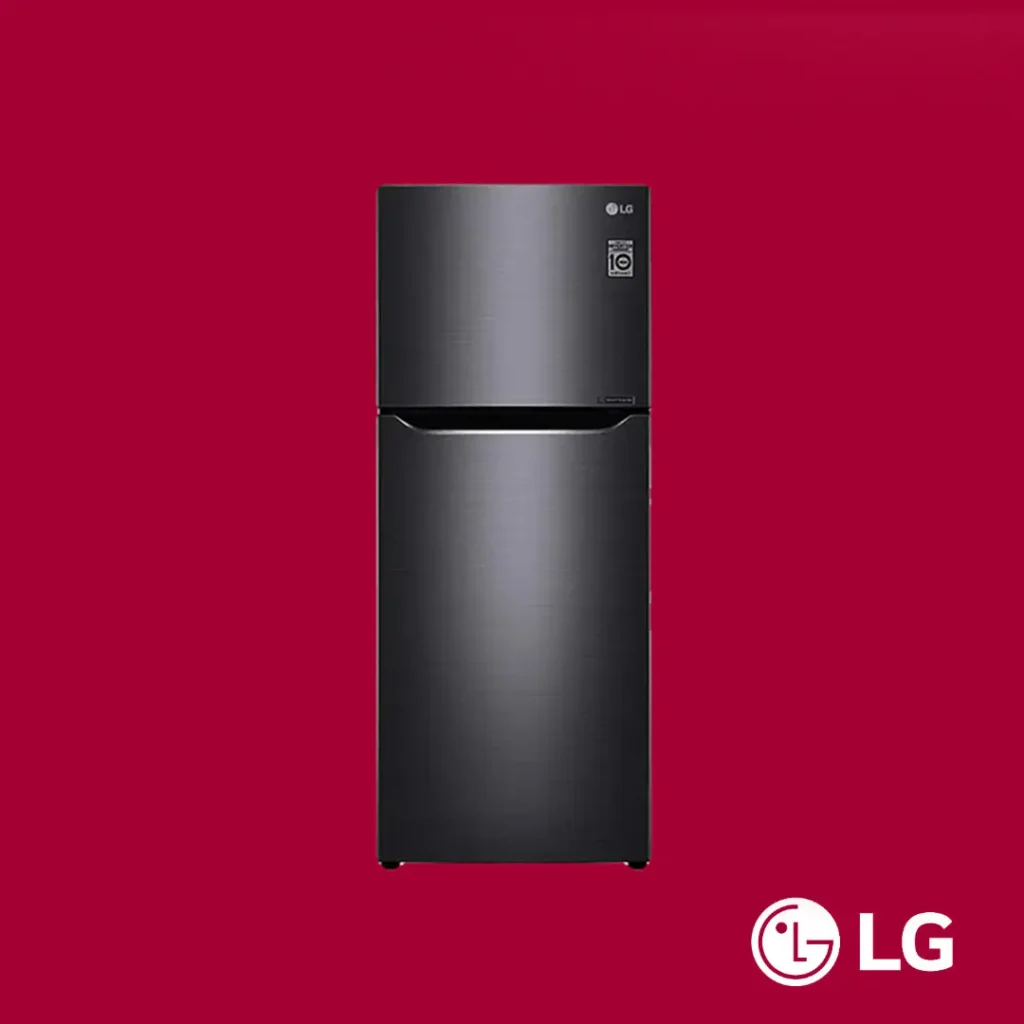
Part 2: Compressor Technology — The Heart of the Fridge
The compressor is the single most important component in any refrigerator or freezer. It is the motor that drives the entire cooling process. The type of compressor determines energy consumption, noise levels, lifespan, and how well the appliance handles Nigeria’s challenging power environment.
Standard (Conventional) Compressor
The traditional compressor in most affordable fridges operates at a single, fixed speed. When the temperature inside rises above the set point, it switches on at full power. When the temperature drops to the target, it switches off completely. This on-off cycling happens repeatedly throughout the day.
In Nigeria’s heat, this cycling happens very frequently — the compressor works hard to compensate for heat and every time the door opens. Every time it starts back up, it draws a large surge of power. This surge is what trips small generators, strains inverters, and over time, causes significant wear on the compressor components themselves.
Inverter Compressor
An inverter compressor runs at variable speed. Instead of switching on at full power and off completely, it runs continuously at whatever speed is needed to maintain the set temperature — fast when the fridge needs to cool quickly, slow and quiet when the temperature is already stable.
The practical advantages for Nigerian homes are significant:
Energy saving: Inverter compressors consume 30 to 50 percent less electricity than conventional compressors of the same size. In a home where the fridge runs all day on generator fuel or inverter power, this saving is felt every single month.
Generator and inverter friendly: Because the inverter compressor starts gradually — what engineers call a soft start — it does not create the large power surge that trips generators and strains inverter batteries. A conventional fridge starting up can draw four to six times its running wattage for a fraction of a second. An inverter fridge draws steadily and gently.
Longer lifespan: Less mechanical stress from constant starting and stopping means the compressor components wear significantly more slowly. Inverter refrigerators typically last two to three years longer than conventional models under the same conditions.
Quieter operation: Variable-speed operation is dramatically quieter than on-off cycling. An inverter fridge hums steadily at low volume rather than clicking on and off with the audible thump of a conventional compressor.
Better cold retention: Consistent, continuous cooling means temperature fluctuations inside the fridge are minimal — which is better for food preservation and means less temperature recovery needed after the door is opened.
Is it worth the extra cost?
The price difference between a conventional and inverter refrigerator of similar size is typically between ₦30,000 and ₦70,000 depending on the model. The monthly electricity saving on the same model ranges from ₦2,000 to ₦5,000, meaning the additional investment pays for itself within 12 to 18 months — and continues saving money for the remaining years of the appliance’s life. For most Nigerian households, inverter technology is absolutely worth it.
Part 3: Types of Refrigerators and Freezers — Which One Do You Actually Need?
Single-Door Refrigerators
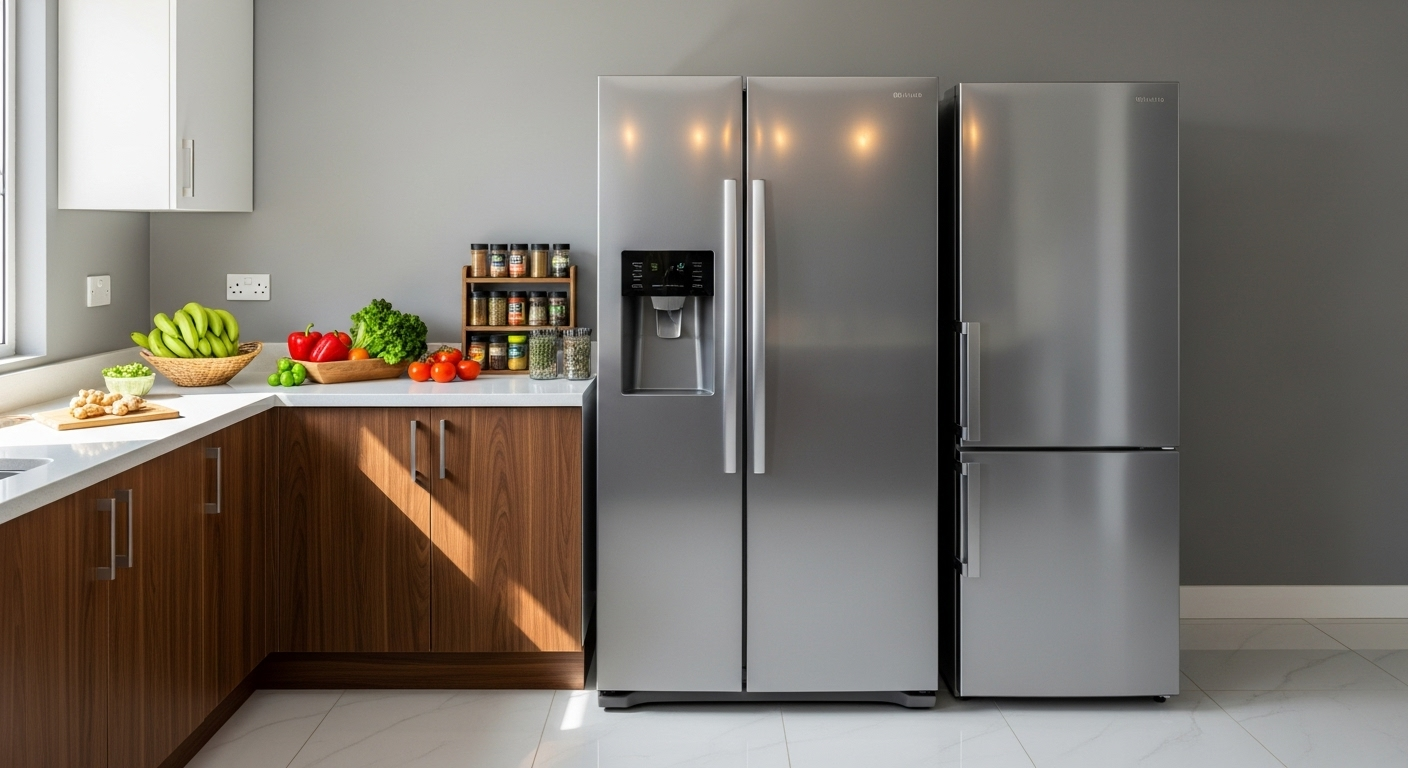
The most common type in Nigerian homes. One door covers both the main fridge compartment and a smaller freezer section at the top. Direct cooling is standard. Affordable, efficient, and widely available in capacities from 90 litres to around 200 litres.
Freezing power is strong — single-door fridges with zinc evaporators freeze water quickly. Cold retention is moderate because the freezer compartment is small.
Best for: Students, singles, couples, small offices, or households with a separate chest freezer who only need the fridge for drinks, condiments, and daily food storage.
Double-Door Refrigerators
Two separate compartments — a full freezer section and a full fridge section — each with its own door and often its own independent temperature control. Most mid-range and premium double-door fridges use no-frost air cooling.
More storage space, better organization, more consistent temperatures throughout. The fridge section is kept at a proper refrigeration temperature without being affected by the freezer, which preserves food freshness for longer.
Best for: Families of three or more, households that buy in bulk, or anyone who needs serious fridge capacity alongside good freezer performance.
Bottom-Freezer Refrigerators
A variation on the double-door design where the freezer is at the bottom and the fridge is at eye level. Practically, this means the food you access most often — fresh produce, drinks, leftovers — is at the most convenient height. The freezer, which you access less frequently, requires bending.
Many food scientists and ergonomics experts consider this the ideal layout for households that use the fridge section far more than the freezer daily.
Best for: Health-conscious households, families that cook fresh food regularly, or anyone who prioritizes daily fridge convenience.
Chest Freezers
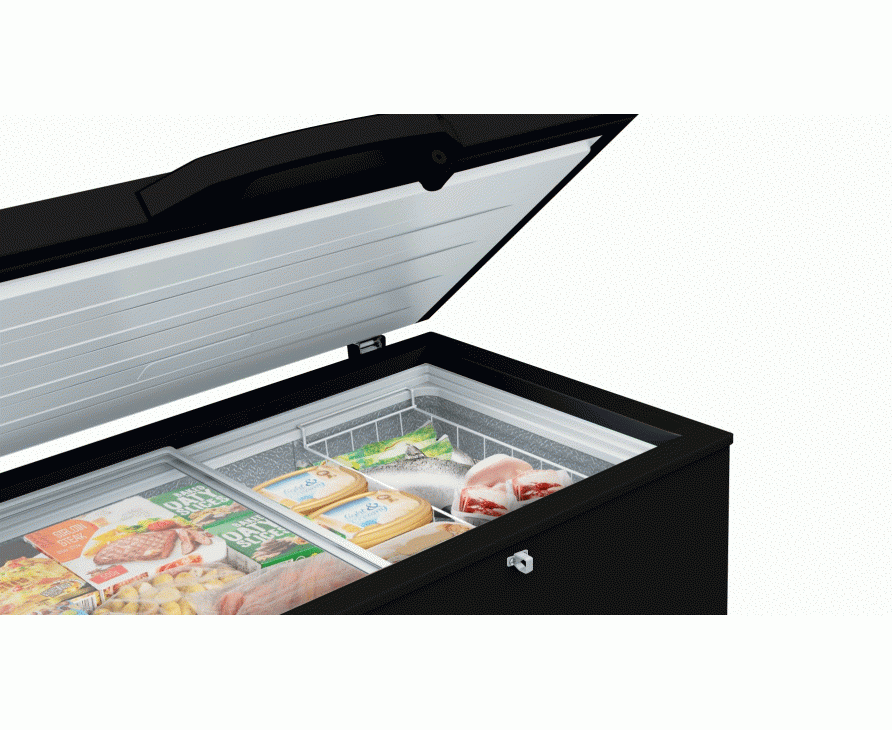
A top-opening freezer designed for maximum cold storage. Chest freezers use direct cooling almost universally, which makes them extremely efficient at creating and maintaining deep freezing temperatures. They retain cold exceptionally well during blackouts because of the large mass of frozen food acting as a thermal buffer — a full chest freezer will stay frozen significantly longer than an empty one during an extended power cut.
Available in sizes from around 100 litres to 600 litres and above for commercial use.
Best for: Bulk storage of meat, fish, vegetables, and frozen goods. Ideal for caterers, businesses, market traders, and large households that buy in bulk.
Standing (Upright) Freezers
A vertical freezer with front-opening door and internal shelves or partitions. Faster access to specific items compared to a chest freezer. Less cold-retention efficiency than a chest freezer during blackouts due to the door orientation, but more organized and easier to manage day-to-day.
Most standing freezers use direct cooling with zinc evaporators for fast, aggressive freezing.
Best for: Businesses like caterers and food vendors who need fast access to many different frozen items. Also suitable for large households that want organized freezer storage.
Showcase / Display Freezers and Chillers
Glass-front units designed for commercial display. Showcase freezers maintain soft-freeze temperatures suitable for ice cream and chilled products. Chillers maintain refrigeration — not freezing — temperatures and are designed for cold drinks, dairy products, and perishables in supermarkets and shops.
Best for: Shops, supermarkets, caterers, restaurants, and anyone selling chilled products.
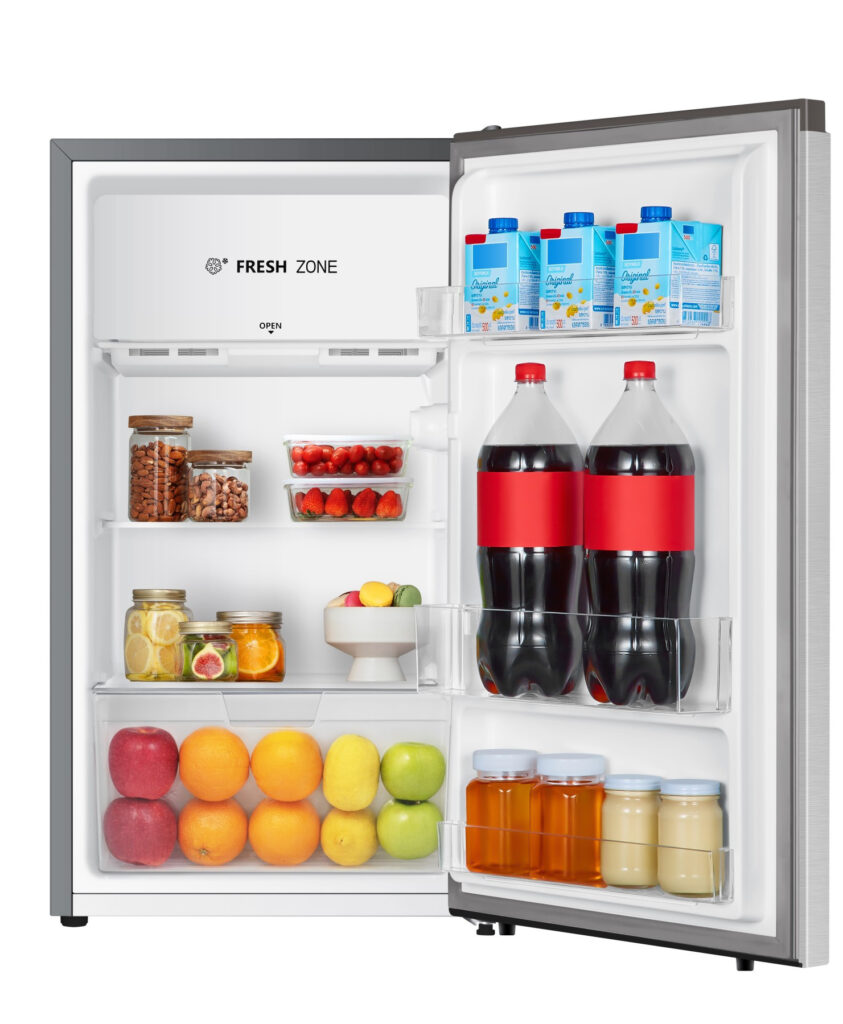
Fridge & Freezers
Buy Original Fridges & Freezers Online in Nigeria
Part 4: Capacity — Choosing the Right Size for Your Household
Buying too small means the fridge is always overpacked, which restricts airflow and forces the compressor to work harder. Buying too large means you are cooling empty space and wasting energy every day. Here is a practical guide:
| Household / Use | Recommended Fridge Capacity |
|---|---|
| Student / Single person | 90 – 120 litres |
| Couple / Small household | 150 – 200 litres |
| Family of 3–4 | 250 – 350 litres |
| Large family of 5+ | 350 – 500 litres |
| Business / Commercial | Chest or standing freezer, 200L+ |
For chest freezers specifically:
| Use | Recommended Capacity |
|---|---|
| Home backup storage | 100 – 200 litres |
| Small business / trader | 200 – 300 litres |
| Medium business / caterer | 300 – 500 litres |
| Large commercial operation | 500 litres and above |
Practical tip before buying: Measure the space where the fridge will stand — including the door swing clearance in front and ventilation space at the back and sides (typically 5 to 10 cm minimum). Also measure your doorways and corridors to confirm the appliance can physically be moved into the room. Larger models can be surprisingly wide.
Part 5: Single Door vs Double Door — A Direct Comparison
| Feature | Single Door | Double Door |
|---|---|---|
| Cooling system | Mostly direct cooling | Direct or no-frost |
| Freezing speed | Faster | Moderate |
| Cold retention | Shorter during blackouts | Better with good insulation |
| Fridge capacity | Smaller overall | Much larger |
| Organization | Limited | Excellent — separate compartments |
| Power consumption | Lower | Slightly higher |
| Price | Lower | Higher |
| Best for | Singles, students, small homes | Families, bulk buyers |
The truth that most salespeople do not tell you: Single-door fridges freeze faster per litre of space because the evaporator coil is compact and concentrated. Double-door fridges with no-frost systems distribute temperature more evenly but build deep freeze temperatures more gradually. For a family that buys fresh food regularly and needs organized storage across a full-size fridge, the double-door model is worth every extra naira.
Part 6: Built-in vs External Condenser
The condenser is the component that releases heat from the cooling system to the outside air. It determines how easily the fridge dissipates heat — which directly affects how efficiently it cools in Nigeria’s warm climate.
Built-in condenser: Concealed inside the cabinet walls. Produces a cleaner design and is protected from dust and damage. Works well in most home environments. Slightly less aggressive in very hot, poorly ventilated spaces.
External condenser: The classic black coil visible at the back of traditional fridges. Exposed directly to room air, which makes heat dissipation very efficient — especially in hot climates. Can accumulate dust and requires occasional cleaning. More powerful cooling performance in high-ambient-temperature environments.
For Nigerian homes: In rooms that are frequently very hot or have limited airflow — like back rooms or kitchens without ventilation — an external condenser model has a natural advantage. In well-ventilated, air-conditioned spaces, built-in condenser models perform perfectly.
Part 7: Power Reality and Nigerian-Specific Considerations
No refrigerator guide written for Nigeria is complete without addressing power.
Use a Voltage Stabilizer — Always
Nigeria’s grid power fluctuates. Voltage spikes during power restoration are one of the most common causes of compressor damage and electronic control board failure in refrigerators. A voltage stabilizer or AVR rated appropriately for your fridge’s wattage is not optional — it is essential.
The cost of a good stabilizer is a tiny fraction of your fridge’s price. The cost of replacing a compressor without warranty coverage can be enormous. DISPASAL stocks a range of original stabilizers and can recommend the right rating for your specific appliance.
Inverter Fridges and Generator Compatibility
If you use a generator as backup power, one of the most important questions is whether your fridge will start cleanly on it. Conventional compressors draw a startup surge that can be three to six times the running wattage for a split second — enough to trip a small generator or inverter.
Inverter compressor fridges eliminate this problem with soft-start technology. They start gradually and draw power at a steady rate, making them compatible with smaller generators and home inverter systems that would struggle with a conventional fridge.
Cold Retention During Blackouts
How long your fridge keeps food safe during power cuts depends on three things:
- How well insulated the cabinet is
- How full the fridge is (a full fridge retains cold better than an empty one)
- How often the door is opened during the blackout
A well-packed, well-insulated modern fridge or freezer should maintain safe food temperatures for 4 to 8 hours (fridge) and up to 24 to 48 hours (freezer) if unopened. A full chest freezer can hold frozen food safe for 24 to 48 hours or more.
Practical tips for blackouts:
- Keep a container of frozen water in the freezer — it adds thermal mass and extends the safe period
- Avoid opening the fridge during extended power cuts unless necessary
- A full freezer retains cold far longer than a half-empty one
Part 8: How to Identify an Original Fridge or Freezer
The Nigerian market has both genuine products and units that look the part but do not perform or last.
Check the warranty card. Every original refrigerator or freezer comes with a printed warranty document. Standard warranty coverage is one to two years on parts, and five to ten years on the compressor. If there is no warranty card, there is no warranty. Walk away.
Verify the serial number. The number on the back panel must match the number on the box. Take it further — verify it on the brand’s official website where possible.
Check the importer sticker. Official brands have authorized Nigerian importers:
- LG → Fouani Nigeria
- Thermocool (Haier) → Royalline
- Panasonic → Zabadne
- Hisense → Fouani Nigeria
Missing or unclear importer information is a significant red flag.
Inspect the interior finish. Genuine fridges have smooth, evenly finished interior walls, consistently applied shelves, and clean door seals that sit flush all the way around. Rough edges, uneven materials, or poorly fitted components indicate inferior manufacturing.
Feel the compressor weight. Open the back or bottom panel where accessible. A genuine, quality compressor has substantial weight. A flimsy, lightweight compressor unit is a warning sign.
Compare with official catalogue images. Before buying, check the brand’s official Nigerian website or authorized dealer catalogue for the exact model. Layout, colour, finish, and controls should match identically.
Buy from a trusted retailer. All of the checks above assume you are in a position to inspect carefully. Buying from a reputable, established store removes most of this burden — a trusted retailer stocks verified products and stands behind them with warranty support.
Part 9: Maintenance — How to Keep Your Fridge Running for a Decade
A quality refrigerator maintained properly can serve a household for 10 to 15 years. Poor maintenance shortens that significantly.
Clean the condenser coils regularly. The coils at the back or bottom of the fridge accumulate dust. Dusty coils insulate the heat that should be released, forcing the compressor to work harder and run hotter. Wipe or vacuum them every three to six months.
Defrost direct cooling models before ice exceeds 1cm. Once ice buildup on the walls reaches about one centimetre thick, it begins to insulate the evaporator and reduce cooling efficiency. Defrost at this point — do not wait until ice has built up massively.
Do not overpack the fridge. Leave enough space for air to circulate around stored items. Overpacking blocks airflow, creates warm spots, and makes the compressor work harder.
Keep door seals clean and intact. The rubber gasket around the door creates an airtight seal. If it is dirty, cracked, or loose, warm air enters constantly and forces the compressor into continuous operation. Clean seals with a damp cloth and replace them if they lose their elasticity.
Set temperatures correctly. The optimal fridge temperature is 3 to 5 degrees Celsius. The optimal freezer temperature is minus 18 degrees Celsius. Running the fridge colder than necessary wastes energy and can freeze items in the main compartment.
Allow hot food to cool before placing it inside. Putting hot food directly into the fridge raises the internal temperature suddenly, forces the compressor to work hard to compensate, and can cause condensation on surrounding items.
Use a voltage stabilizer consistently. Every time power fluctuates without a stabilizer, there is risk to the electronic controls and compressor. A stabilizer in constant use is the single best maintenance investment you can make.
Part 10: Brand Guide — Who to Trust in Nigeria
Premium Tier
LG: Exceptional refrigerator engineering. LG’s inverter linear compressor technology is one of the most advanced and efficient in the world. Their refrigerators offer outstanding energy efficiency, excellent cold retention, and strong warranty coverage (10-year compressor warranty on many models). Supported by Fouani Nigeria nationwide.
Samsung: Twin Cooling Plus technology — separate cooling circuits for the fridge and freezer sections — produces excellent temperature stability in both compartments and prevents odor transfer between them. Strong build quality and smart features on premium models.
Value Tier
Hisense: The strongest value proposition in the Nigerian market. Hisense offers QLED-equivalent performance in their refrigerator range — quality technology at significantly lower prices than LG and Samsung. Strong local support through Fouani Nigeria. Excellent for families wanting reliable performance at honest prices.
Thermocool (Haier): Nigeria’s most recognized local brand. Strong after-sales network, widely available spare parts, and models designed specifically with Nigerian power conditions in mind. The chest freezer range in particular has a strong reputation for durability and freezing performance.
Skyrun: Local assembly, competitive pricing, and a service network that extends into smaller cities and towns across Nigeria. A sensible choice for buyers in areas where major brand service centres are less accessible.
Budget Tier
Nexus, Maxi, and similar brands: Serve the entry-level market and can represent good value when purchased from a verified retailer with warranty support. The key with this tier is buying original — an original Nexus with a warranty is a far better investment than a counterfeit LG with none.
Shop Refrigerators and Freezers at DISPASAL
At DISPASAL, we stock a full range of single-door and double-door refrigerators, chest freezers, standing freezers, and inverter models from verified brands including LG, Hisense, Skyrun, Thermocool, and Nexus. Every unit comes with proper warranty documentation and honest product information.
When you visit or contact us, we will ask about your household size, cooking habits, power situation, and budget — and help you select the exact model that serves your home best. We also stock voltage stabilizers and surge protectors to protect your investment from day one.
Visit us in-store: No. 2 Berger Paint Junction, Chaza Road, Opposite Jehova Eze Plaza, Shop 5, Suleja, Niger State
WhatsApp, call, or shop online: 📱 09164425471 📧 info@dispasal.com 🌐 dispasal.com
Delivery options available. WhatsApp us to discuss your order and we will arrange it.
Frequently Asked Questions
Which fridge works best with a small generator (I-pass-my-neighbor)?
Any refrigerator with an inverter compressor. The soft-start technology means it does not create the startup surge that trips small generators. It draws power gradually and steadily, making it compatible with smaller backup power systems.
Should I buy inverter or conventional?
For most Nigerian households, inverter is the smarter long-term investment. The higher upfront cost is recovered in electricity savings within 12 to 18 months, and the fridge will last two to three years longer on average.
How long can my fridge keep food safe during a power cut?
A well-insulated, full fridge should keep food safe for 4 to 8 hours if the door remains closed. A full freezer can hold food safely for 24 to 48 hours or more.
Should I buy a fridge with a water dispenser in Nigeria?
Only if you have reliable water pressure and are prepared for filter maintenance. The dispenser adds convenience but also adds components that can fail. In areas with irregular water supply, it may create more frustration than value.
Single door or double door for a family of four?
Double door without question. The additional capacity, separate compartments, and better food organization make it the right choice for any household of three or more.
How do I make my fridge last longer?
Use a voltage stabilizer without exception. Clean the condenser coils every few months. Do not overload it. Defrost direct cooling models before ice exceeds one centimetre. Keep door seals clean and intact. These five habits alone can add years to any refrigerator’s working life.
Quality You Can Trust. Service You Can Count On. — DISPASAL, Suleja, Niger State
Any questions about fridges, freezers, or any of our products? WhatsApp us on 09164425471 or visit us in-store. We are always ready to help.

Home Appliance
Nigeria’s No.1 Online Store: Trusted Brands, Authentic Products, Affordable Prices, Fast Delivery
Related article
Professional Guide to Choosing the Right Fan in Nigeria (2026)
How To Choose The Right Sound System In Nigeria (2026 Guide)
How to Buy Home Appliances & Gadgets Online Safely in Nigeria
The Complete Guide to Buying a New Television(TV) in Nigeria (2026): What Every Nigerian Should Know
New arrivals
-
Qasa Air Fryer QFY-660 (6L)
Original price was: ₦75,000.00.₦60,000.00Current price is: ₦60,000.00. -
Maxi Air Fryer 5L Black (50CCY)
Original price was: ₦68,000.00.₦55,000.00Current price is: ₦55,000.00. -
Maxi Air Fryer 120H2CY
Original price was: ₦105,000.00.₦90,000.00Current price is: ₦90,000.00. -
Hisense Air Fryer 5L 1500W (H05AFBK1S3)
Original price was: ₦75,000.00.₦65,000.00Current price is: ₦65,000.00. -
Hisense Air Fryer 6.3L 1700W (H06AFBS1S3)
Original price was: ₦85,000.00.₦77,000.00Current price is: ₦77,000.00.