









The Complete Microwave Oven Guide: What Every Nigerian Home Needs to Know Before Buying

By DISPASAL | Your Trusted Home Appliance Partner
There is a kitchen appliance sitting in millions of homes across the world right now, saving people hours of cooking time every week, reducing energy costs, preserving more nutrients in food, and making mealtime dramatically easier for busy families.
Yet in many Nigerian homes, this same appliance is either absent, misunderstood, feared, or drastically underused.
We are talking about the microwave oven and if you do not yet have one, or you have one that you are not using to its full potential, this guide was written specifically for you.
At DISPASAL, we do not just sell appliances. We educate our customers so that every purchase you make is the right one. So before you spend your money — or before you decide not to — read this guide carefully. By the time you finish, you will know exactly what a microwave oven is, what it can do, what the common myths about it are, which type is right for your home, and how to identify a quality product that will serve your household for years.
What Is a Microwave Oven and How Does It Work
A microwave oven is an electric kitchen appliance that cooks, heats, and defrost food using electromagnetic waves — specifically, microwave-frequency radiation. Do not let the word “radiation” alarm you. We will address the safety concerns shortly, and the science is reassuring.
Here is how it works in simple terms:
When you place food in the microwave and press start, the appliance generates invisible waves of energy that penetrate the food and directly excite the water molecules inside it. Those excited molecules vibrate rapidly, and that vibration produces heat — cooking the food from the inside outward.
Because the energy goes directly into the food rather than heating the surrounding air first (as a gas cooker or conventional oven does), the microwave is extraordinarily fast and efficient. What takes 30 minutes on a gas cooker might take just 5 minutes in a microwave.
“Is a Microwave Safe?” — Addressing the Myths Honestly
Before we talk about benefits, we must address the elephant in the room. Many Nigerians have heard things about microwave ovens — that they cause cancer, that they destroy nutrients, or that they make food radioactive. These concerns are understandable, but the science is clear.
Myth 1: “Microwave radiation makes food dangerous or radioactive.”
This is false. Microwaves use non-ionizing radiation — the same category as radio waves and visible light. This type of energy cannot alter the DNA of food or make it radioactive. It simply generates heat. The World Health Organization, the US Food and Drug Administration, and research institutions worldwide confirm that microwave ovens are completely safe to use when operated correctly.
Myth 2: “Microwaves destroy the nutrients in food.”
Research consistently shows the opposite. Because microwave cooking is faster and usually requires little or no water, it actually preserves more nutrients than many traditional cooking methods. Boiling vegetables, for example, causes water-soluble vitamins like Vitamin C and folate to leach out into the cooking water, which is usually discarded. Microwaving avoids this entirely. Studies published in respected food science journals found that vegetables like broccoli, spinach, and beans retained significantly higher antioxidant levels when microwaved compared to boiling or pressure cooking.
Myth 3: “It is unsafe to use every day.”
Modern microwave ovens are designed with multiple layers of shielding. The radiation produced inside is contained within the appliance and falls far below any level considered unsafe. Eating microwaved food every day is perfectly safe — provided you are using microwave-safe containers and cooking nutritious food.
The bottom line: microwave ovens are among the safest and most rigorously tested kitchen appliances in the world.
The Benefits of Owning a Microwave Oven
1. Speed That Changes Your Entire Cooking Routine
A microwave can cook food up to six times faster than a conventional oven. This is not a small difference — it is transformational for busy households. Reheating a full plate of food takes under three minutes. Defrosting frozen meat that would take hours at room temperature takes ten minutes. Preparing a quick breakfast or snack for a child before school becomes effortless.
For working professionals, students, and parents managing a full household, the time saved by a microwave every single day adds up to hours every week.
2. Significant Energy Savings
A microwave uses considerably less energy than a gas cooker or conventional electric oven for most everyday cooking tasks. Because it heats only the food — not the surrounding air, not the pot, not the oven chamber — the efficiency is much higher. Studies have shown that cooking small to medium portions in a microwave uses only 10–25% of the energy a conventional oven would use for the same task.
In a country where energy costs are a real and growing concern for households, this saving is meaningful every month.
3. Superior Nutrient Preservation
As addressed in the myths section above, microwaving is one of the best cooking methods for preserving the vitamins and minerals naturally present in food. Short cooking times and minimal water use mean that what was nutritious before cooking remains largely nutritious after. This matters greatly for families with children, for health-conscious individuals, and for anyone who wants to get real value from the food they prepare.
4. Perfect for Defrosting
One of the most practical everyday uses of a microwave is defrosting frozen food safely and quickly. Leaving meat out at room temperature to defrost can promote bacterial growth, creating a genuine food safety risk. A microwave defrost function brings the food to a safe temperature evenly and rapidly, without beginning to cook it — keeping your family’s meals safe.
5. Child and Kitchen Safety
A microwave eliminates open flames and exposed hot oil entirely. There is no fire risk, no hot burner that a curious child can touch, no splashing boiling water. The exterior of most microwaves remains cool during operation, and many models include a child lock feature that prevents accidental activation. For homes with young children, this makes the kitchen a significantly safer environment.
6. Versatility Beyond Reheating
Many people think of microwaves only for reheating leftovers. But a modern microwave — particularly convection or grill models — can do far more:
- Cook rice, vegetables, pasta, and eggs
- Defrost meat, fish, and poultry
- Bake small cakes and pastries (convection models)
- Grill chicken, fish, and kebabs (grill models)
- Steam vegetables while retaining their colour and nutrients
- Melt butter, chocolate, and other ingredients for baking
- Make quick snacks and breakfast items in minutes
The more advanced the model, the more your microwave becomes a genuine multi-function cooking station.
7. Easy to Use for Every Member of the Family
A microwave oven is perhaps the most user-friendly kitchen appliance available. A teenager can reheat their own food safely. An elderly parent can warm a meal without managing a gas cooker. A housekeeper preparing multiple things at once can delegate reheating entirely to the microwave. The simple controls — set time, set power, press start — are accessible to virtually everyone.
8. Easy to Clean
Because food cooked in a microwave rarely splatters the way it does in frying or stove cooking, the interior stays relatively clean. Most modern microwave interiors are smooth, non-porous, and can be wiped down in minutes. Some models even feature steam-clean functions that loosen stubborn stains with the push of a button.
The Different Types of Microwave Ovens Explained
One of the most important things to understand before buying is that not all microwave ovens are the same. There are three main types, each designed for a different level of cooking.
Type 1: Solo Microwave Oven
This is the most basic and most affordable type. A solo microwave is designed for reheating, defrosting, and simple cooking. It does not bake or grill. If your primary need is warming up food quickly, defrosting, and light cooking, a solo microwave is perfectly suited to that purpose and represents excellent value.
Best for: Singles, students, small households, offices, or anyone who mainly reheats food and wants a straightforward, affordable appliance.
Type 2: Grill Microwave Oven
A grill microwave includes a heating element inside the cavity in addition to the standard microwave function. This allows it to brown and crisp food the way a grill or toaster oven would — something a solo microwave cannot do. You get beautifully grilled chicken, crispy toast, browned pastries, and grilled fish, in addition to all the standard microwave functions.
Best for: Families who want versatility — reheating AND proper cooking/grilling in one appliance.
Type 3: Convection Microwave Oven
The most advanced type, a convection microwave combines standard microwave cooking with a fan-driven hot air circulation system — the same technology used in conventional ovens and air fryers. This means it can bake cakes, roast meat, grill, reheat, and defrost — all in one appliance.
Best for: Larger households, serious home cooks, or anyone who wants one powerful, multi-function appliance that can handle almost any cooking task.
How to Choose the Right Microwave Oven for Your Home
Step 1: Know Your Primary Use
Ask yourself honestly: what will you mostly use this for?
- Mainly reheating and defrosting → Solo microwave
- Reheating AND grilling → Grill microwave
- Full cooking, baking, roasting AND reheating → Convection microwave
There is no point paying for features you will never use — but equally, buying a solo microwave when you genuinely want to bake and grill will leave you disappointed.
Step 2: Choose the Right Capacity
Microwave capacity is measured in litres. Here is a practical guide for Nigerian household sizes:
| Household Size | Recommended Capacity |
|---|---|
| 1 person / student / office | 17–20 litres |
| 2–3 people | 20–25 litres |
| Family of 4–5 | 25–30 litres |
| Large family / frequent cooking | 30–42 litres |
A larger capacity means you can heat bigger dishes and bowls without difficulty. If you frequently cook or reheat large portions for the whole family, do not undersize.
Step 3: Check the Wattage
Wattage determines how powerful the microwave is and how fast it cooks. Most quality home microwaves range from 700 to 1,200 watts. The higher the wattage, the faster and more evenly your food heats.
- 700–800 watts: Basic, slower. Suitable for light use.
- 900–1,000 watts: Good all-round power for everyday family use.
- 1,100–1,200 watts: High performance, fast cooking, best results.
For most Nigerian households doing regular cooking and reheating, 900–1,000 watts is the ideal range.
Step 4: Look for These Key Features
Turntable/rotating plate: Rotates food during cooking to ensure even, uniform heating throughout. This is standard on most quality models.
Multiple power levels: Allows you to control the intensity — low power for defrosting, medium for gentle reheating, high for full cooking. Essential for good results.
Digital timer and clock: Precise control over cooking time. Much more accurate than dial-only models.
Auto-cook programs: Pre-set programs for common foods (rice, vegetables, popcorn, fish, etc.) that take the guesswork out of cooking time and power level.
Child lock: Prevents the oven from being accidentally activated by children.
Auto shut-off: The oven stops automatically when the timer ends. A basic safety feature that every model should have.
Warranty: Non-negotiable. Any quality microwave should carry a minimum one-year warranty from the manufacturer, backed by the retailer.
How to Identify a Quality Microwave Oven
The Nigerian market has a mix of genuine, high-quality products and inferior units that look good in the shop but disappoint at home. Here is how to protect yourself:
1. Buy from a trusted retailer with warranty support. This is the single most important step. A reputable store will only stock verified products, provide a proper warranty document, and support you if something goes wrong. At DISPASAL, every microwave we sell comes with a verified warranty and honest product information.
2. Check the interior quality. Open the microwave and inspect the cavity. The interior should be smooth, consistently finished, and free of rough edges or uneven coating. The turntable plate should sit flat and rotate smoothly.
3. Verify the wattage on the label. The wattage should be clearly printed on the back label or specification plate. If a seller cannot confirm the wattage, that is a red flag.
4. Test the controls. Buttons or dials should feel solid and responsive. Digital displays should be clear and easy to read. Loose, flimsy controls often indicate poor overall build quality.
5. Feel the door seal. The door should close firmly with a satisfying seal. A loose or poorly aligned door is a quality concern — it affects both cooking performance and the containment of microwave energy.
6. Ask about spare parts and service. Quality brands have service centres or authorized technicians. A brand with no service network means that if anything goes wrong after the warranty period, you have no support.
Microwave vs. Gas Cooker vs. Conventional Oven: What the Numbers Show
Many Nigerians wonder whether a microwave truly adds value when they already have a gas cooker or electric oven. Here is an honest comparison:
| Task | Gas Cooker | Conventional Oven | Microwave |
|---|---|---|---|
| Reheat a plate of food | 10–15 minutes | 20–30 minutes | 2–4 minutes |
| Defrost 1kg of meat | 2–3 hours (room temp) | Not ideal | 8–12 minutes |
| Cook vegetables | 15–20 minutes (boiling) | 20–30 minutes | 4–7 minutes |
| Energy used (small portions) | Moderate | High | Very low (10–25% of oven) |
| Open flame risk | Yes | No | No |
| Nutrient retention | Moderate | Moderate | High |
The microwave does not replace your gas cooker for all cooking — soups, stews, large pots of rice, and fried foods are still better suited to the cooker. But for everything else — reheating, defrosting, quick cooking, and snacks — the microwave wins on speed, energy, safety, and nutrition.
Think of the microwave not as a replacement for your cooker, but as its perfect partner in the kitchen.
Practical Tips for Getting the Best from Your Microwave
Once you bring your microwave home, these habits will help you get consistently excellent results:
- Always use microwave-safe containers — glass, ceramic, or containers labelled microwave-safe. Never use metal dishes, aluminium foil, or regular plastic bags inside a microwave.
- Cover food before heating — a microwave-safe cover or damp paper towel keeps moisture in and prevents splatter, giving you better-tasting food and an easier cleanup.
- Stir food halfway through — for soups, stews, and saucy dishes, stirring at the halfway point ensures even heating throughout.
- Do not run the microwave empty — operating with nothing inside can damage the magnetron (the component that generates microwaves). Always have food or a microwave-safe glass of water inside when running.
- Cut food into even pieces for cooking — uniform size means uniform cooking. Irregular chunks will cook unevenly.
- Clean regularly — wipe the interior after every use to prevent odour buildup and maintain hygiene. A bowl of water with lemon juice microwaved for two minutes then left to steam for five minutes loosens any stubborn residue naturally.
Shop Microwave Ovens at DISPASAL — All Types, All Sizes, with Warranty
At DISPASAL, we stock solo, grill, and convection microwave ovens in a range of capacities and wattages to suit every household and every budget. Every unit on our shelves has been selected for build quality, brand reliability, and proper warranty coverage.
Our team is always ready to sit with you, understand your cooking habits and household size, and help you select the exact model that fits your needs — not the most expensive one, but the right one.
Whether you visit us in-store or reach out via WhatsApp, you will receive honest advice and professional service every time.
Visit us in-store: No. 2 Berger Paint Junction, Chaza Road, Opposite Jehova Eze Plaza, Shop 5, Suleja, Niger State
Shop online or reach us on WhatsApp: 📱 09164425471 📧 info@dispasal.com 🌐 dispasal.com
Delivery options available. WhatsApp us to discuss your order and we will take it from there.
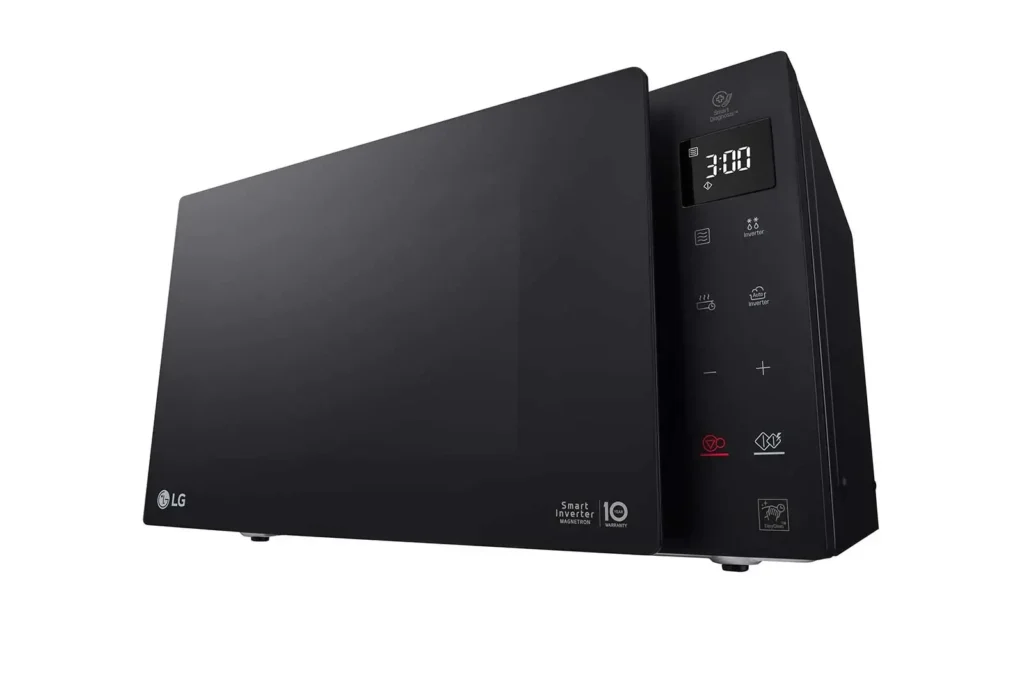
Microwaves
Shop our latest microwave deals
Frequently Asked Questions
Can I cook rice in a microwave? Yes — most microwaves handle rice well, especially with the right microwave-safe dish and the correct water ratio. Convection models give the best results for rice cooking.
Is microwaved food less tasty than stove-cooked food? Reheated food generally tastes best from a microwave, especially soups and stews. For fresh cooking, the taste is comparable to stovetop cooking for most dishes, though browning and crispiness require a grill or convection model.
How long does a quality microwave last? A well-maintained microwave from a quality brand typically lasts 7 to 10 years with regular use. Buying a reputable brand with a proper warranty gives you the best chance of full longevity.
Can children use a microwave safely? Yes — under appropriate supervision, a microwave is actually one of the safest kitchen appliances for older children and teenagers to use. No open flames, no hot oil, and no exposed heating elements. Models with child lock features add an extra layer of safety.
Final Word: A Microwave Oven Is Not a Luxury — It Is a Practical Investment
In a household where time, energy costs, and healthy eating all matter — and in Nigeria in 2025, they all matter more than ever — a microwave oven is one of the most sensible purchases you can make for your home.
It will save you time every single day. It will reduce your energy consumption. It will preserve more nutrition in the food your family eats. And it will make your kitchen safer and more convenient for everyone who uses it.
The only question is which one is right for your home. Come into DISPASAL and let us help you answer that.
Quality You Can Trust. Service You Can Count On.
— DISPASAL, Suleja, Niger State
Questions about microwave ovens or any of our products? WhatsApp 09164425471 or visit us in-store. We are always happy to help.
fb