













The Complete Blender Buying Guide for Nigerian Kitchens (2026): Every Type Explained, Every Use Covered

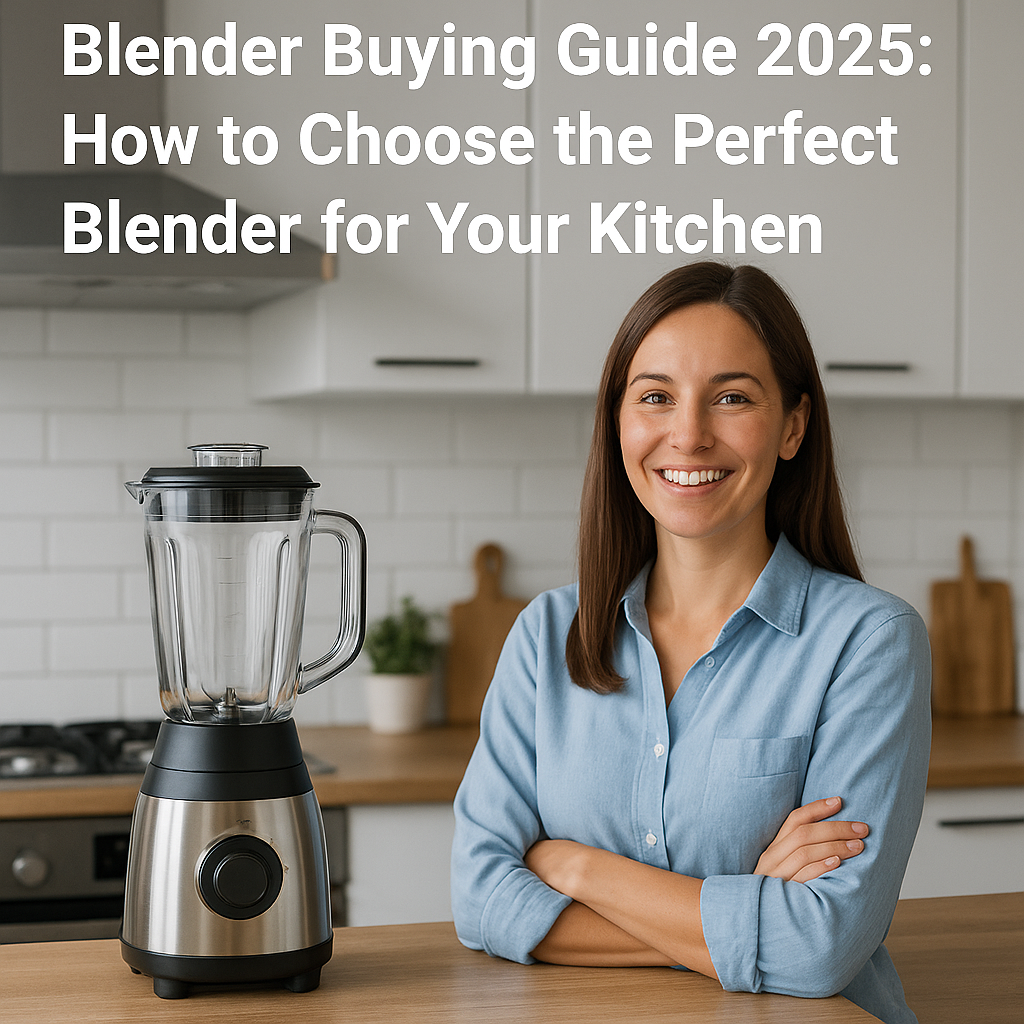
By DISPASAL | Your Trusted Home Appliance Partner
The Blender Every Nigerian Kitchen Uses — But Most People Buy Wrong
Walk into almost any Nigerian kitchen and you will find a blender. It sits on the counter, it works hard, and in most homes it is used every single day — for tomatoes and pepper, for smoothies and fruit juice, for soups and stews, for groundnut paste and crayfish.
The blender is perhaps the most used kitchen appliance in Nigeria. And yet, despite how essential it is, most people buy theirs without understanding the key differences between types, without matching the wattage to the tasks they actually need, and without knowing why the ₦15,000 blender they bought three months ago is already struggling — or worse, dead.
This guide changes that. We cover every type of blender available in Nigeria today — countertop blenders, hand blenders, personal blenders, and high-performance models — in honest, practical detail. We explain exactly what each type is designed for, where each one fails, how to match wattage to your actual kitchen needs, what features genuinely matter versus what is marketing, and how to identify a quality product that will last in the Nigerian kitchen environment.
By the time you finish reading, you will know exactly which blender — or combination of blenders — belongs in your home.
Part 1: Understanding What a Blender Actually Does — and Why Type Matters
Before talking about specific models, it helps to understand what separates the different types of blenders — because they are not simply big or small versions of the same machine. They work differently, are designed for different tasks, and perform very differently when pushed outside their designed purpose.
All blenders use rotating blades powered by an electric motor to cut, crush, puree, or liquefy ingredients. But the size of the motor, the position of the blades, the design of the jar, and the speed range determine what any particular blender can handle confidently — and where it will struggle or fail.
The biggest mistake Nigerian buyers make is buying one type of blender and expecting it to do everything. A hand blender bought to make pepper and tomato sauce will frustrate you when you try to crush hard crayfish with it. A personal blender designed for single-serve smoothies will overheat if you use it twice a day for the family’s daily pepper blending. A standard countertop blender will chip its blades trying to do what only a high-performance model was built for.
Understanding which tool does what — and buying accordingly — is the entire foundation of this guide.
Part 2: The Four Main Types of Blenders
Type 1: The Countertop Blender (Standard Jar Blender)
This is the most common blender in Nigerian homes, and the one most people picture when the word “blender” is mentioned. A countertop blender consists of a motor base that sits on the kitchen counter, a jar or pitcher that sits on top of the motor, and blades inside the base of the jar. You add ingredients, place the lid on, and the motor drives the blades.
What it does well:
The countertop blender is the true workhorse of the Nigerian kitchen. In the right wattage range, it handles the full range of daily cooking tasks:
- Tomatoes, pepper, onions, and fresh ingredients — the cornerstone of Nigerian cooking. A good countertop blender processes these to whatever consistency you need, from chunky to completely smooth.
- Smoothies and fruit juices — soft fruits, leafy greens, and liquids blend effortlessly.
- Soups and stews — blend cooked soups directly when transferred to the jar.
- Crayfish and dry spices — on models with adequate wattage and solid blades, dry grinding is possible.
- Groundnut and melon (egusi) paste — mid to high wattage models handle these well.
- Ice crushing — models rated 600 watts and above handle ice confidently.
- Batters and doughs — some models handle lighter batters for pancakes and small pastries.
What it does not do well:
The countertop blender requires you to transfer ingredients into its jar, which means additional bowls and cleanup steps. For blending directly in a cooking pot — a hot soup on the stove, for example — you need to carefully ladle it into the blender jar in batches, which is a more involved process than a hand blender.
The jar and motor base also require counter space and cabinet storage, which matters in smaller Nigerian kitchens.
Capacity:
Countertop blenders range from about 1 litre to 2.5 litres in jar capacity. For a household of two to four people preparing daily pepper and tomato for Nigerian cooking, a 1.5 litre jar handles most needs comfortably. For larger families or anyone who preps ingredients in advance for several days, 2 litres and above is more practical.
Who the countertop blender is best for:
Virtually every Nigerian kitchen needs one. It is the most versatile general-purpose blending tool available. Singles, couples, families of all sizes — the countertop blender is a daily essential in the Nigerian kitchen.
Type 2: The Hand Blender (Immersion Blender / Stick Blender)
The hand blender is a long, slim, handheld device with a motor at the top and a blending head — a small set of rotating blades — at the bottom. Instead of bringing food to the blender, you bring the blender to the food. You insert it directly into whatever container the food is already in — a pot, a bowl, a jug — and blend there.
This single design feature changes everything about how the hand blender is used and what it is good for.
What it does exceptionally well:
- Blending soups directly in the pot — this is the hand blender’s defining advantage. A pot of vegetable soup, tomato sauce, pumpkin soup, or any cooked soup can be blended to a smooth, velvety consistency without the risk, hassle, and mess of transferring hot liquid in batches to a countertop blender. You simply lower the hand blender into the pot and blend. No extra bowls. No splashing hot soup across the kitchen.
- Baby food and purees — the ability to puree small portions of cooked vegetables, fruits, and grains directly in whatever bowl or cup you are using makes the hand blender ideal for preparing baby food. Small quantities blend easily without the waste and cleanup of a full countertop blender.
- Sauces and dressings — salad dressings, marinades, and small-batch sauces blend smoothly and quickly, directly in the serving jug.
- Whipping cream and egg whites — many hand blenders come with a whisk attachment that whips cream and eggs efficiently.
- Milkshakes and small smoothies — in a tall cup or jug, a hand blender makes quick, smooth milkshakes.
What it does not do well:
The hand blender is less powerful than a countertop blender of the same price point. It typically cannot crush ice, process dry ingredients like crayfish or hard spices, or handle the volume of tomatoes and pepper that a Nigerian family prepares daily. It is a specialist tool for specific tasks, not a daily all-purpose kitchen blender.
Only 25% of immersion blenders can handle ice. They lack the speed, durability, and safety features of regular blenders for tough tasks.
The hand blender also requires you to hold and guide it throughout the blending process — you cannot step away and let it run. For large volumes, this becomes tiring.
Who the hand blender is best for:
Mothers of young children who prepare baby food regularly. Anyone who makes soups and stews frequently and wants the convenience of blending directly in the cooking pot. Home bakers who need a whisk for cream and eggs. The hand blender is best as a second blender that complements a countertop model — not as a primary replacement.
Type 3: The Personal Blender (Single-Serve Blender)
The personal blender is a compact blender designed for one person’s serving at a time. It typically features a small motor base and a blending jar that doubles as a drinking cup — you blend directly in the cup you will drink from. Many models include a travel lid that screws on after blending, making the cup portable.
What it does well:
- Single-serve smoothies and shakes — this is the personal blender’s primary purpose and it does it exceptionally well. Soft fruits, yoghurt, protein powder, milk, and similar ingredients blend quickly and efficiently.
- Protein shakes for fitness — the portable cup design is ideal for anyone who makes a shake before a workout or work commute.
- Small portions of juices — fresh fruit juices in one-person quantities.
- Quick sauces and dips — small amounts of salsa, dips, or light sauces.
What it does not do well:
The personal blender’s small motor and compact design mean it cannot handle tough ingredients — ice, frozen fruit, hard vegetables, crayfish, or dry spices. It is not designed for the volumes involved in Nigerian daily cooking. Trying to use a personal blender as your primary kitchen blender in a Nigerian household will result in rapid motor burnout.
Who the personal blender is best for:
Health-conscious individuals who make a smoothie or protein shake daily and want a portable, convenient option. Students living alone who primarily blend soft ingredients for personal use. Fitness enthusiasts. The personal blender is not suitable as a primary household blender for Nigerian cooking — it lacks the power, capacity, and durability.
Type 4: The High-Performance Blender
High-performance blenders are professional-grade countertop blenders with motors typically ranging from 1,000 to 1,500 watts or more. They are built for tasks that standard blenders cannot handle — turning whole nuts into nut butter, crushing large quantities of ice into snow-fine consistency, processing frozen fruit directly from the freezer, making silky smooth pepper and tomato paste with no graininess, and running multiple cycles daily in commercial or heavy home use.
What it does exceptionally well:
- Nut butter — groundnut, cashew, and almond butter blended to complete smoothness directly from whole nuts.
- Ice crushing — professional-grade ice crushing for large quantities.
- Frozen ingredients — blends frozen fruit directly, without thawing first.
- Egusi and hard grains — melon seeds, dried legumes, and similar hard Nigerian ingredients.
- Commercial volume — for kitchens, caterers, restaurants, and bars running the blender multiple times every hour.
- Perfect smoothness — the motor power and blade design produce a level of fineness that standard blenders cannot match for soups, smoothies, and sauces.
Who the high-performance blender is best for:
Caterers, restaurants, bars, and juice businesses who need reliability under daily commercial use. Serious home cooks who process large volumes of ingredients and want the absolute best results. Families who regularly make groundnut paste, egusi paste, or similar demanding preparations. The upfront cost is significantly higher, but a quality high-performance blender lasts many years under heavy use.
Part 3: Understanding Wattage — The Most Important Number on the Box
Wattage is the measurement of the blender motor’s power. It is the single most important specification to understand before buying, because buying the wrong wattage for your actual use is the primary reason Nigerian blenders die young.
What wattage actually means:
A 400-watt motor produces 400 watts of power continuously. A 1,000-watt motor produces 1,000 watts. More watts mean a stronger motor that can handle denser, harder ingredients with less strain. A motor operating within its comfort zone lasts for years. A motor pushed consistently beyond its capacity overheats, wears out quickly, and fails.
Wattage guide for Nigerian kitchen tasks:
300 to 500 watts: Suitable for soft fruits, leafy vegetables, yoghurt, milk-based drinks, and light sauces. At the lower end of this range, daily pepper and tomato blending is possible but the motor will work harder than ideal. For occasional, light use — fine. For daily Nigerian cooking — the motor is at the edge of its comfortable range.
500 to 800 watts: The practical sweet spot for most Nigerian households doing daily cooking. This range handles pepper, tomatoes, onions, soft-to-medium ingredients, smoothies, and light ice crushing without significant motor strain. A 700-watt blender from a reputable brand in this range is a solid all-purpose choice for a family of two to four.
800 to 1,000 watts: Comfortable with harder ingredients — ice, crayfish, dry spices, melon seeds. Can handle daily family-sized blending without excessive wear. Recommended for larger families who blend twice or more per day.
1,000 watts and above: High-performance range. Handles everything — nut butters, frozen ingredients, commercial volume, professional smoothness. For serious home cooks and commercial use.
The critical warning about wattage claims:
In the Nigerian market, blender wattage is one of the most commonly misrepresented specifications. A cheap blender marketed as “1,000 watts” may not deliver anywhere near that power consistently. The claimed wattage on the box is the peak wattage — the maximum the motor can draw for a brief moment. Sustained operating wattage, which is what matters for actual performance, is often significantly lower.
The safest protection: buy from a trusted retailer stocking verified brands, and apply the general rule that a quality blender at a given wattage from a reputable brand will outperform a higher-stated-wattage blender from an unknown brand.
Part 4: The Nigerian Kitchen Context — What Your Blender Must Handle
Standard blender guides written for Western markets focus on smoothies, soups, and nut butters. The Nigerian kitchen adds a specific set of high-demand tasks that must be part of any honest buying guide for our market.
Daily pepper and tomato blending:
This is the hardest single daily task a blender faces in the Nigerian kitchen. Fresh tomatoes, tatashe, rodo, scotch bonnet, and onions — blended together, sometimes with the tomatoes fully ripe and therefore quite fibrous. The volume involved, and the frequency (many households do this every day), puts significant and sustained strain on the motor. The minimum recommendation for this task in a family kitchen is 600 watts from a trusted brand. Below this, expect the motor to show signs of strain within months of daily use.
Crayfish and dry ingredient grinding:
Many households use their blender to grind dried crayfish, uziza seeds, and dry pepper. This is a demanding task for a blender — the dry grinding creates significant friction and heat. Not all blenders are designed for dry grinding. Models with a separate dry mill attachment are designed for this and handle it safely. Running dry ingredients in a wet blending jar can damage blades and seals over time. If you regularly grind crayfish and dry spices, look for a blender that explicitly includes a dry mill or grinding attachment.
Egusi (melon seed) and groundnut paste:
Wet grinding of egusi and groundnuts requires both power and blade quality. For egusi specifically, some blenders are far better than others — the seeds need to be processed fine enough to cook properly, which requires sustained motor power and sharp blades. 700 watts and above handles this with reasonable effort. Below 500 watts, the motor struggles.
Large volumes for family cooking:
Nigerian family meals are not made in small portions. A pot of stew for a family of five means blending two to three rounds of pepper — each round filling the blender jar fully. A blender doing three consecutive full-jar cycles every morning needs a motor that can sustain that work without overheating. This is where the importance of purchasing genuine quality brands becomes concrete — cheap motors overheat quickly under sustained use.
Part 5: Key Features That Genuinely Matter — And Ones That Do Not
Features That Matter
Motor quality over stated wattage: As explained above — a genuine 600-watt motor from LG, Hisense, or Binatone outperforms a claimed 1,000-watt motor from an unknown brand. Brand reputation for motor quality is more reliable than box claims.
Blade material and design: Blender blades must be stainless steel. Stainless steel resists rust, maintains sharpness longer, and is safe in contact with food. Some cheaper blenders use chrome-plated blades that rust after extended contact with acidic ingredients like tomatoes. Stainless steel is non-negotiable.
The blade shape also matters. Cross-blade designs with multiple cutting edges at different angles produce finer, smoother results than simple two-edge blades.
Jar material: Three options are available — glass, BPA-free plastic, and stainless steel.
Glass jars are scratch-resistant, do not absorb odours or colours from strongly pigmented ingredients like pepper and tomatoes, are safe for use with hot liquids, and last indefinitely. The trade-off is weight and the risk of cracking if dropped. For Nigerian kitchens where the blender is used heavily with hot ingredients, glass is an excellent choice.
BPA-free plastic jars are lightweight and shatter-proof — a practical advantage in a busy kitchen. Quality BPA-free plastic does not leach harmful compounds into food. The trade-off is that plastic scratches over time, can absorb odours and colours from strongly flavoured ingredients, and has a shorter lifespan than glass.
Stainless steel jars are durable and keep contents cool, but you cannot see the contents during blending, which requires more guesswork about consistency.
Lid quality: The lid of a blender must seal firmly and completely. A lid that does not lock properly allows contents to splash out during high-speed blending — a genuine safety hazard with hot liquids. Quality blenders have a two-piece lid with a central removable cap that allows you to add ingredients while blending.
Speed settings and pulse function: Two to three speed settings cover most daily needs — low for soft ingredients and liquids, high for tough ingredients and ice. A pulse function gives you short bursts of power for precise control over texture — particularly useful for chunky preparations where you do not want everything completely pureed.
Multiple speed settings and pulse allow you to stop at exactly the consistency you want rather than choosing between fully blended and barely mixed.
Ease of cleaning: A blender that is difficult to clean will either be under-cleaned (hygiene issue) or avoided (convenience issue). The best designs have a jar that detaches cleanly from the blade assembly for thorough washing. Many modern blenders offer a self-cleaning function — add warm water and a small amount of dish soap to the jar, blend for 30 seconds, rinse. For daily use, this convenience matters.
Overheating protection: Quality blenders have a thermal cutoff that automatically switches the motor off if it overheats, rather than allowing it to burn out. This is a feature that protects the motor’s life, and it is often missing in inferior products.
Features That Do Not Add As Much Value as Marketed
Many preset programs on basic models: Preset programs labelled “smoothie,” “ice crush,” and “soup” on entry-level blenders often simply run the motor at a fixed speed for a fixed time. They add complexity to the interface without significantly improving results over manually selecting the right speed.
Extremely high stated wattage on very cheap blenders: As covered above — peak wattage claims on the box are not a reliable indicator of actual sustained performance. A ₦15,000 blender claiming 1,500 watts is unlikely to deliver that power reliably.
Part 6: Countertop vs Hand Blender — The Direct Comparison
| Feature | Countertop Blender | Hand Blender |
|---|---|---|
| Power | Higher — 400W to 1,500W+ | Lower — 150W to 600W typically |
| Volume capacity | Large — 1 to 2.5 litres | Limited — whatever container it goes into |
| Blend in cooking pot | No — must transfer to jar | Yes — insert directly in any pot |
| Ice crushing | Yes (mid to high wattage) | Mostly no — only 25% of models |
| Dry grinding | Some models (with dry mill) | No |
| Daily pepper blending | Yes — primary use | Not recommended |
| Baby food | Yes | Excellent — blend in serving bowl |
| Storage space | Significant counter/cabinet space | Fits in a drawer |
| Cleanup | More components to wash | Very simple — just the blending head |
| Noise level | Louder | Quieter |
| Price | Moderate to high | Generally lower |
| Best role | Primary daily blender | Specialist second blender |
The honest verdict: For Nigerian kitchens, the countertop blender is the primary appliance that handles daily cooking. The hand blender is an excellent, affordable companion for soup blending, baby food, and small tasks — but it cannot replace a countertop blender as the main kitchen tool.
If your budget allows only one blender, choose a quality countertop model in the right wattage. If your budget allows two, adding a hand blender gives you the best of both worlds.
Part 7: Choosing the Right Capacity for Your Household
| Household Size | Recommended Jar Capacity |
|---|---|
| Single person | 1 to 1.2 litres |
| Couple | 1.2 to 1.5 litres |
| Family of 3–4 | 1.5 to 2 litres |
| Large family of 5+ | 2 litres and above |
| Catering / commercial | 2+ litres or high-performance model |
The overloading warning: Never fill a blender jar more than two-thirds full when blending liquids or ingredients that will liquefy significantly. Hot liquids especially expand and create steam pressure inside a sealed blender — overfilling and sealing tightly can cause the lid to burst off under pressure. For hot soups, fill no more than halfway and hold the lid firmly with a folded cloth when starting.
Part 8: How to Identify a Quality Blender
The Nigerian market has both genuine, quality blenders and inferior products that look similar on the shelf. These checks protect you before you buy.
Test the motor sound:
Ask the retailer to demonstrate the blender running empty for a few seconds. A quality motor produces a consistent, controlled sound. Cheap motors often produce a strained, irregular, or excessively noisy sound even when running empty.
Check the blade assembly:
The blade should be stainless steel, feel firmly seated in its housing, and show no wobble or loose movement. The blade seal — the rubber gasket between the blade assembly and the jar — should be intact, flexible, and properly positioned. A poor seal means leaking at the base of the jar during blending.
Check the jar:
Glass jars should be clear and free of bubbles or uneven thickness. Plastic jars should be rigid, not soft or flexible. The measurement markings should be clearly printed. The lid should snap firmly and completely, with no obvious gaps.
Examine the motor base:
The base should feel stable and substantial, not hollow or lightweight. The rubber feet at the bottom should grip firmly — a blender that slides on the counter during blending is a safety hazard. The power cord should be well insulated and the connection to the base should be firm.
Verify the brand and warranty:
Every quality blender comes with a manufacturer warranty card. Check the model number on the blender against the official brand website or catalogue. Reputable brands available in Nigeria include LG, Hisense, Binatone, Kenwood, and Maxi. At DISPASAL, every blender we stock comes with a verified warranty and after-sales support.
Part 9: Care and Maintenance — Making Your Blender Last
Never immerse the motor base in water. The motor base must never be submerged — it is electrical and will be permanently damaged. Wipe the motor base with a damp cloth only.
Clean the jar immediately after use. Tomato, pepper, and egusi residue dries and hardens inside the jar if left for hours. Cleaning immediately after use takes seconds; cleaning dried-on residue is far more difficult.
Use the self-clean method for daily cleaning. Add warm water and a small amount of dish soap to the jar, secure the lid, and blend for 30 seconds. Empty, rinse with clean water, and allow to dry. This takes under a minute and maintains hygiene effectively.
Never blend boiling liquid without precautions. Allow very hot liquids to cool slightly before blending. When blending hot ingredients, fill only halfway, hold the lid firmly with a cloth, and start on the lowest speed before increasing. Steam pressure in a sealed jar with boiling liquid can blow the lid off forcefully.
Do not run the blender continuously for more than 60 seconds at a stretch. Even quality motors need brief pauses during extended blending sessions. For large quantities of pepper or other ingredients, blend in cycles of 30 to 60 seconds with short pauses of 10 to 15 seconds between cycles. This prevents overheating.
Dry the blade assembly and jar thoroughly before storing. Moisture trapped between the blade assembly and jar seal encourages mould growth and can corrode metal components over time.
Store with the jar separate from the base where practical — stacking the full assembled blender adds weight on the motor base over time.
Part 10: Brand Guide — Who to Trust in Nigeria
Hisense: Hisense blenders offer strong, consistent performance at honest mid-range prices. Their motors are reliable for daily Nigerian cooking tasks and the brand maintains quality standards across their appliance range. A good first choice for families wanting quality without premium pricing.
Binatone: A well-established brand in the Nigerian market with a long track record. Binatone blenders are widely available, spare parts are accessible, and they handle Nigerian kitchen demands with reliability. Popular with homes that prioritise easy maintenance and after-sales support.
LG: LG brings its electrical engineering quality to their blender range. Consistent motor performance, good build quality, and brand reliability. A trusted choice at the mid-to-upper price range.
Kenwood: Kenwood blenders in the mid and premium range offer excellent build quality and thoughtful design. Particularly strong in the higher wattage ranges where their motors genuinely deliver what is stated.
Maxi: An affordable and accessible option for budget-conscious buyers, particularly suitable for light to moderate daily use. Buy from a verified retailer with warranty confirmation.
Shop Blenders at DISPASAL
At DISPASAL, we stock countertop blenders, hand blenders, and high-performance models from verified brands including Hisense, Binatone, LG, and Maxi — across every capacity and wattage range for every household size and budget. Every blender we sell is genuine, comes with a manufacturer warranty, and is backed by honest buying advice from our team.
Tell us what you cook, how often you blend, and how many people you are cooking for — and we will recommend the exact model that genuinely fits your kitchen.
Visit us in-store: No. 2 Berger Paint Junction, Chaza Road, Opposite Jehova Eze Plaza, Shop 5, Suleja, Niger State
WhatsApp, call, or shop online: 📱 09164425471 📧 info@dispasal.com 🌐 dispasal.com
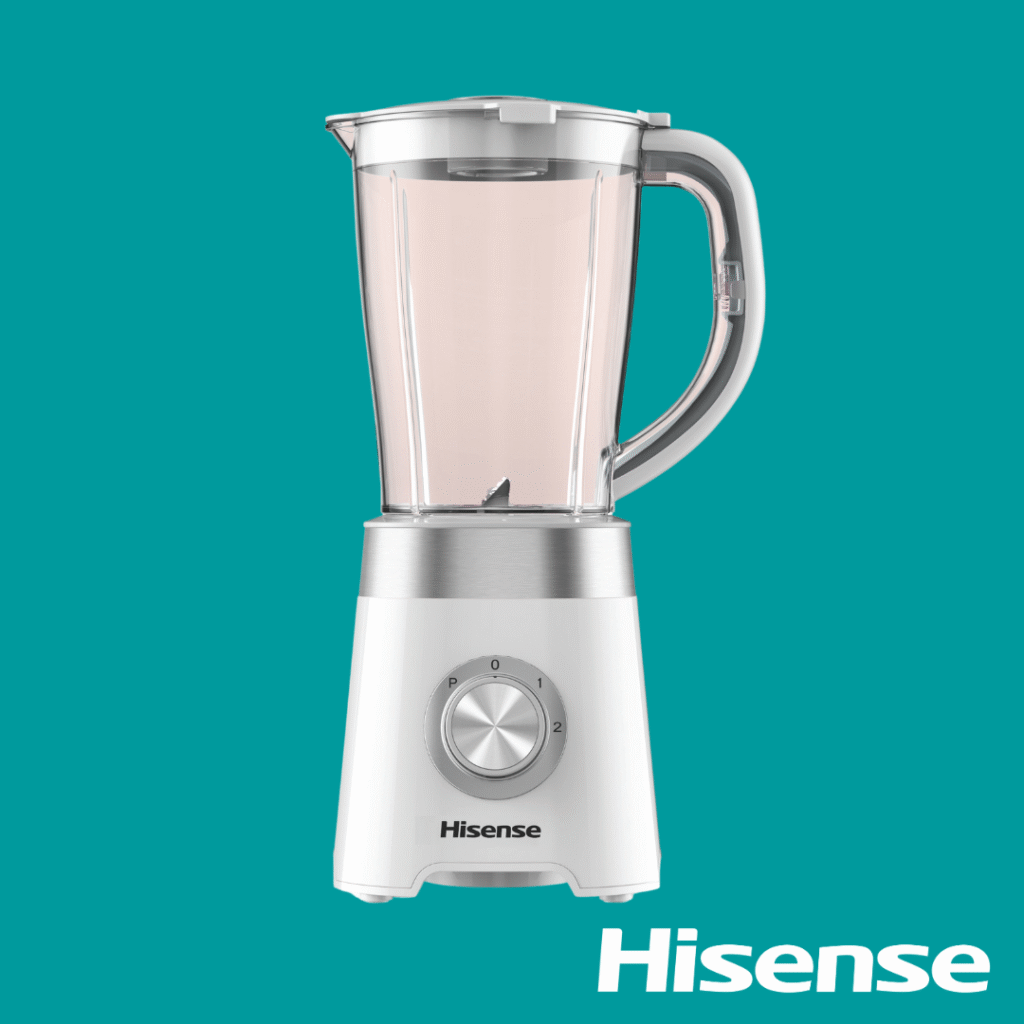
Hisense Blender 500W 1.5L White Grey (H15TBWES2)
-
Model: H15TBWES2
Frequently Asked Questions
Can I use my blender to grind dry crayfish and spices? You can on models that include a dry mill attachment — a separate smaller jar designed specifically for dry grinding. Running dry ingredients in the main wet blending jar is not recommended for most models — the dry grinding creates heat and friction that damages the blade seal and bearings over time. If you grind crayfish regularly, buy a blender with a dedicated grinding attachment or use a separate electric spice grinder.
Why does my blender overheat and stop? Most quality blenders have a thermal cutoff that automatically stops the motor when it overheats — this is a protective feature, not a fault. The motor switched off to protect itself. Allow it to cool for 10 to 15 minutes before restarting. If this happens frequently, the motor is being pushed beyond its comfortable range — either from wattage being insufficient for the task, or from running too long without breaks.
How long should a good blender last? A quality blender from a reputable brand, used properly and maintained well, should last five to eight years with regular daily home use. The primary causes of early failure are overloading the motor with tasks beyond its wattage rating, insufficient cleaning that leads to residue buildup damaging the blade seal, and power fluctuations without voltage protection.
Should I buy a glass or plastic jar? For Nigerian kitchens, glass is the better long-term choice — it does not scratch, does not absorb the colours and odours of heavily pigmented Nigerian ingredients, and does not degrade over time. Plastic is more practical if you have young children in the kitchen or if dropping the jar is a concern. Quality BPA-free plastic is food-safe and a reasonable choice if handled with care.
Can a hand blender replace a countertop blender? Not for Nigerian daily cooking. A hand blender is excellent for blending soups in the pot and making baby food — tasks where it is genuinely better than a countertop blender. But it lacks the power for daily pepper and tomato blending, dry grinding, ice crushing, and the volume that Nigerian family cooking requires. It is a complement to a countertop blender, not a replacement.
What wattage do I need for daily pepper and tomato blending? A minimum of 600 watts from a reputable brand for daily family-sized blending. 700 to 800 watts is the comfortable range that handles this task reliably without straining the motor over time.
Quality You Can Trust. Service You Can Count On. — DISPASAL, Suleja, Niger State
Questions about blenders or any of our products? WhatsApp 09164425471 or visit us in-store. We are always ready to help.