








How to Fix an Electric Kettle That Won’t Turn On

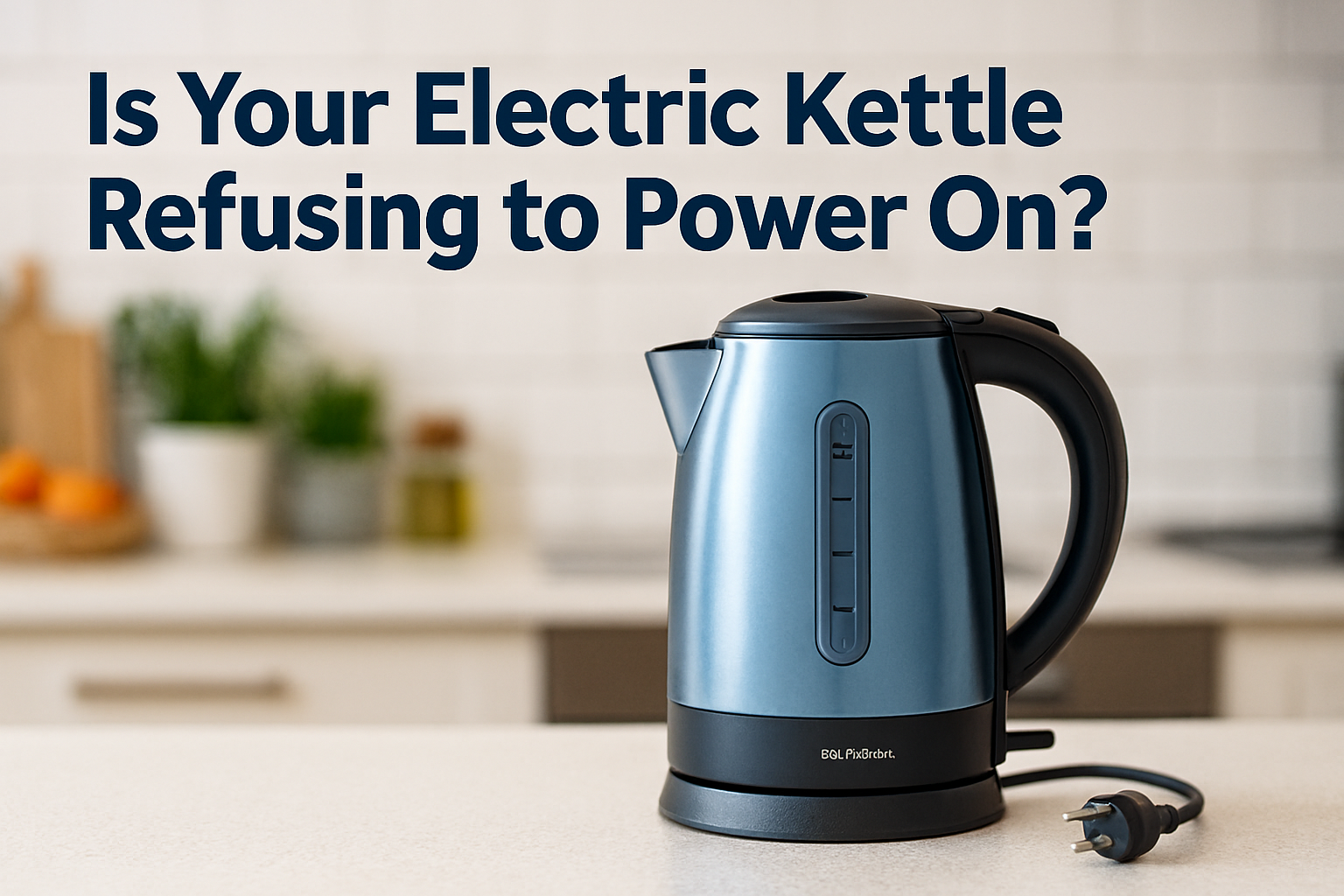
An electric kettle is one of the most used appliances in any home — for tea, coffee, noodles, or quick hot water. So when it suddenly stops turning on, it can be frustrating.
The good news?
Most kettle problems are simple and inexpensive to fix. And in some cases, replacement is the safer option.
This guide explains:
- The real reasons kettles fail
- What you can safely fix yourself
- When it’s time to replace the kettle
Common Causes of a Kettle Not Turning On
These are the most proven causes based on appliance repair standards:
1. Loose or Faulty Power Supply
If the socket or extension is bad, the kettle won’t receive power.
2. Damaged Power Cable or Plug
Worn cables are common and dangerous.
3. Dry-Boil Protection Activated
Modern kettles shut down automatically if switched on without water.
4. Dirty or Corroded Base Contacts
Poor contact between the base and kettle blocks electricity flow.
5. Limescale Buildup
Heavy scale insulates the heating element and reduces performance.
6. Worn Switch or Heating Element
Internal parts eventually fail due to heat and age.
Step-by-Step Fixes You Can Try Safely
Step 1: Check the Power Connection
Plug another appliance into the same socket.
If it works, the socket is fine.
Push the kettle firmly into the base. Many kettles fail simply because of loose seating.
Step 2: Inspect the Power Cable
Look for:
- Cuts or exposed wires
- Burn marks
- Loose plug head
If the cable is damaged:
Do not tape it. Replace it immediately.
A damaged cord is a serious fire risk.
Step 3: Reset Dry-Boil Protection
If the kettle was heated empty:
- Let it cool for 15–30 minutes
- Fill with water
- Try again
This safety feature protects the heating element from burning out.
Step 4: Clean the Base Contacts
Unplug the kettle.
Use:
- Dry cloth
- Cotton bud
- Fine sandpaper (very gently)
Clean both:
- The metal base plate
- The kettle’s bottom contacts
Dirt and corrosion block power flow.
Step 5: Descale the Kettle
Limescale is one of the biggest silent killers of kettles.
Mix:
- 50% water
- 50% vinegar or lemon juice
Boil once. Leave for 30 minutes. Rinse thoroughly.
This:
- Restores heating efficiency
- Extends kettle lifespan
- Improves water taste
When You Should Replace the Kettle
Replace your kettle if:
- The switch no longer clicks
- Heating element is burnt
- You smell burning plastic
- You see sparks
- The body is melting or cracked
At this point, repair is not safe or economical.
A new kettle costs less than hospital bills.
Pro Tips to Prevent Future Problems
These habits can double your kettle’s lifespan:
- Always add water before switching on
- Never overload the socket
- Keep base dry at all times
- Descale once a month
- Avoid using damaged extensions
- Do not leave kettle plugged permanently
Final Word
Most kettle failures are caused by:
- Power issues
- Dirt
- Limescale
- User habits
Only a small percentage are true internal failures.
Fix what you can — but when safety is compromised, replacement is the smart move.
Need a New Kettle or Repair Support?
At Dispasal, we provide:
✅ Affordable electric kettles
✅ Durable models for Nigerian power conditions
✅ Accessories and replacements
✅ Technician referrals for safe repairs








One thought on “How to Fix an Electric Kettle That Won’t Turn On”