









How Much Electricity Does a Refrigerator Consume? (Types, Ice Retention & Smart Buying Guide)

A refrigerator is one of the few appliances in your home that works 24 hours a day, every day. Because of this, many households often ask:
- “Is my fridge consuming too much light?”
- “Should I buy an inverter fridge or a regular one?”
- “How long will my fridge keep ice when there’s no power?”
The truth is simple: not all refrigerators consume the same amount of electricity, and not all fridges retain cold the same way during power outages.
Power consumption and ice retention depend on:
- Fridge type and size
- Compressor technology
- Build and insulation quality
- Usage habits
- Power stability (very important in Nigeria)
Let’s break everything down clearly.
What Determines a Refrigerator’s Power Consumption?
A refrigerator’s electricity usage is influenced by:
- Capacity (litres)
- Design (single door, double door, freezer, side-by-side)
- Technology (inverter vs non-inverter)
- Cooling system (direct cool or frost-free)
- Ambient temperature and ventilation
- Frequency of door opening
- Power quality and voltage stability
Average Power Consumption by Refrigerator Type
1. Small Single-Door Refrigerator (90–150 Litres)
- Power usage: 80–120 watts
- Monthly consumption: 30–45 kWh
- Best for: Students, singles, offices
Pros
- Low power usage
- Affordable
Cons
- Limited storage
- Poor ice retention during outages
2. Medium Double-Door Refrigerator (200–350 Litres)
- Power usage: 120–180 watts
- Monthly consumption: 50–75 kWh
- Best for: Small to medium families
Pros
- Balanced storage and power usage
- Popular household choice
Cons
- Ice retention depends on build quality
3. Large Double-Door / Frost-Free Refrigerator (350–500 Litres)
- Power usage: 180–250 watts
- Monthly consumption: 80–120 kWh
- Best for: Large families
Pros
- Convenience and even cooling
- No manual defrosting
Cons
- Higher power consumption
- Loses cold faster during outages
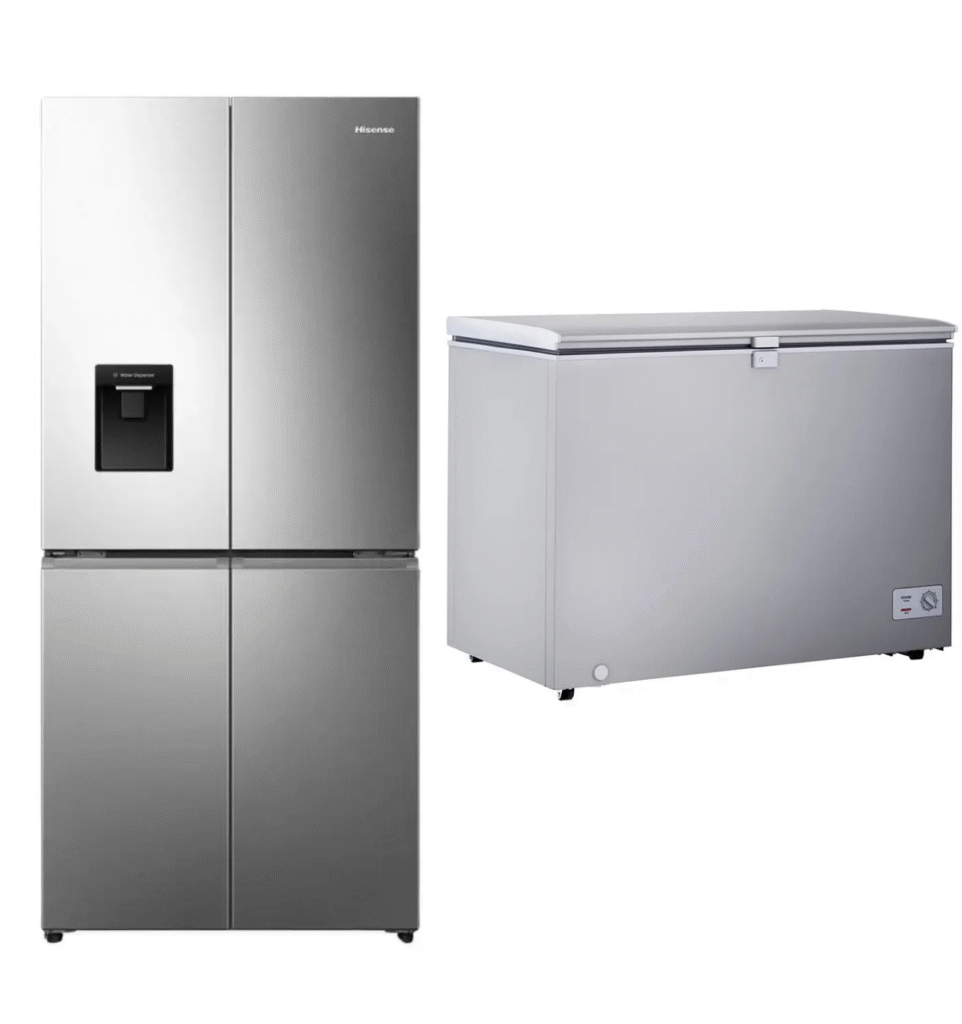
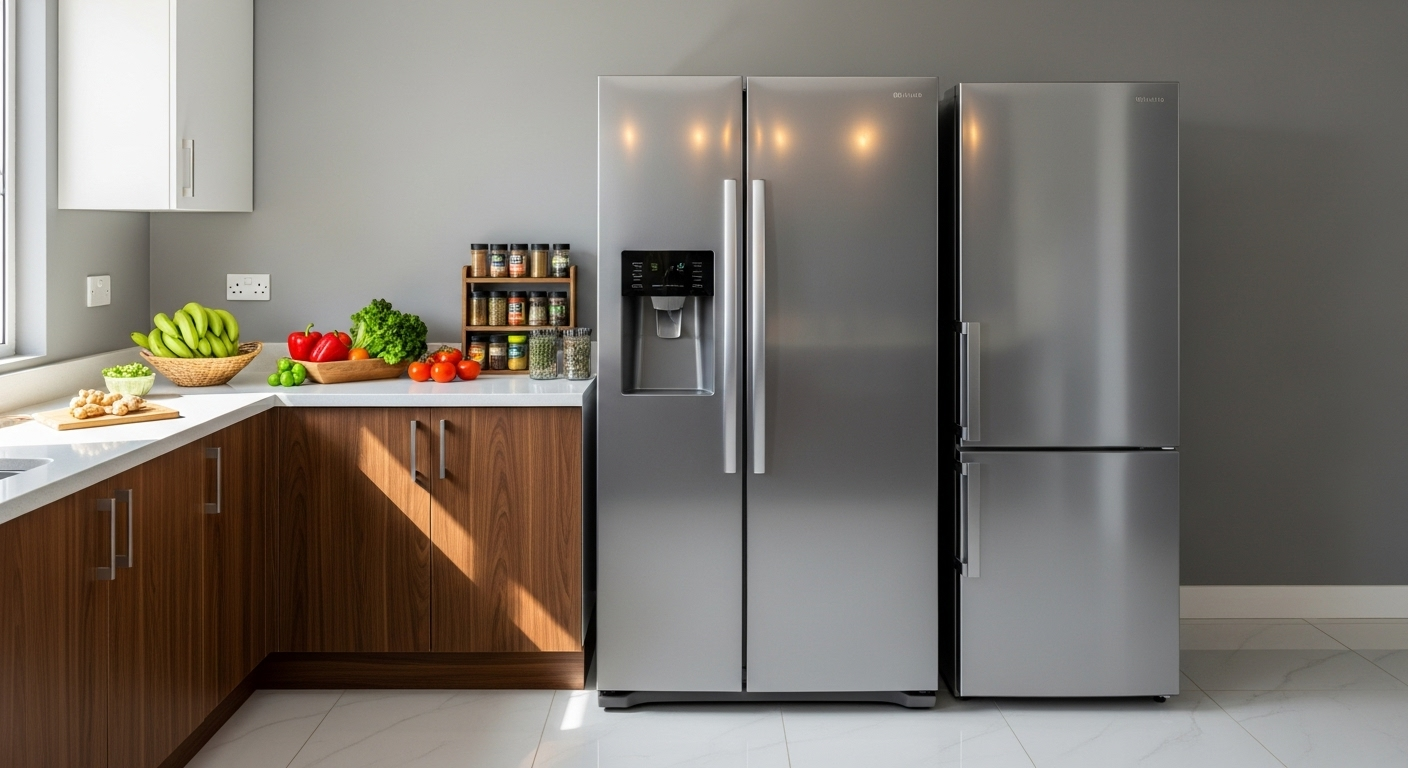
4. Side-by-Side Refrigerator (500+ Litres)
- Power usage: 250–400 watts
- Monthly consumption: 120–180 kWh
Pros
- Large capacity and luxury features
Cons
- High electricity usage
- Not ideal for unstable power supply
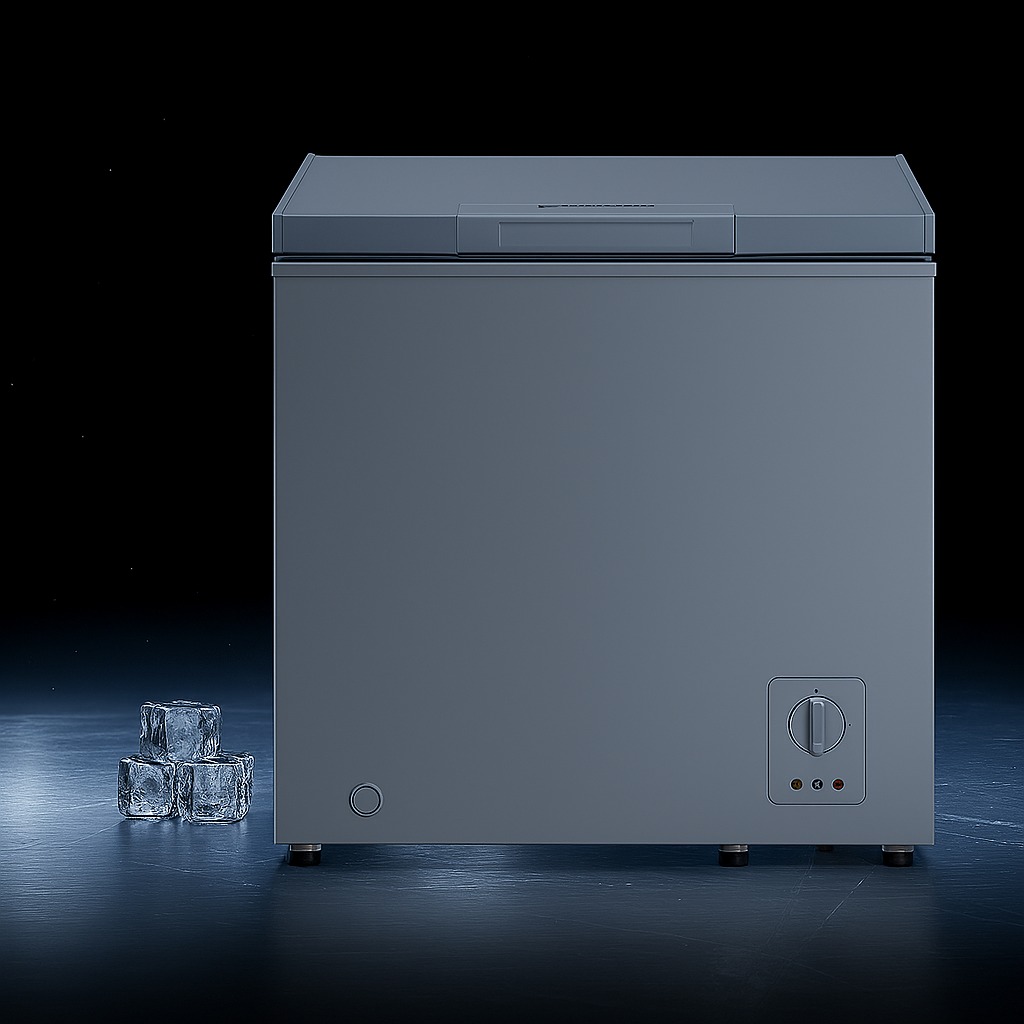
5. Chest Freezers (Deep Freezers)
- Small chest freezer: 100–150 watts
- Large chest freezer: 200–350 watts
Pros
- Excellent ice retention
- Efficient once fully frozen
Cons
- Requires proper space
- Higher startup power draw
Inverter Refrigerator vs Regular Refrigerator
This is where real energy savings happen.
Regular (Non-Inverter) Refrigerator
- Compressor runs ON at full power, then OFF
- Consumes more electricity
- Strains generators and inverters
Inverter Refrigerator
- Compressor adjusts speed gradually
- Uses 30–50% less electricity
- Quieter and more durable
- Ideal for solar, inverter, and generator use
👉 Best choice for Nigerian power conditions
Refrigerator Build Type & Ice Retention (How Long It Stays Cold Without Power)
In areas with unstable electricity, ice retention is just as important as power consumption.
1. Single-Door Refrigerator (Direct Cool)
Build:
- Manual defrost
- Basic insulation
Ice Retention:
- 4–8 hours without power
❌ Ice melts quickly during long outages
2. Double-Door Refrigerator (Direct Cool)
Build:
- Separate freezer compartment
- Better insulation
Ice Retention:
- 8–12 hours without power
✅ Better than single door
❌ Still affected by long outages
3. Frost-Free Refrigerator
Build:
- Fan-assisted cooling
- Automatic defrost
Ice Retention:
- 6–10 hours without power
❌ Cold escapes faster due to airflow system
4. Inverter Refrigerator
Build:
- Variable-speed inverter compressor
- Thick insulation
Ice Retention:
- 12–24 hours without power (doors closed)
✅ Best balance of power saving and ice retention
5. Chest Freezer (Deep Freezer)
Build:
- Horizontal design
- Very thick insulation
Ice Retention:
- 24–48 hours without power
✅ Best ice retention of all appliances
Quick Ice Retention Comparison
| Appliance Type | Ice Retention | Power Efficiency |
|---|---|---|
| Single-Door Fridge | 4–8 hrs | Low |
| Double-Door (Direct Cool) | 8–12 hrs | Medium |
| Frost-Free Fridge | 6–10 hrs | Medium |
| Inverter Fridge | 12–24 hrs | High |
| Chest Freezer | 24–48 hrs | Very High |
How Much Does a Refrigerator Cost You Monthly?
Using an average electricity tariff of ₦70 per kWh:
- Small fridge (40 kWh) → ₦2,800/month
- Medium inverter fridge (55 kWh) → ₦3,850/month
- Large non-inverter fridge (120 kWh) → ₦8,400/month
Over one year, the difference can be tens of thousands of naira.
NOTE. The prices here are varies depending on your location and electricity tariff plan
How to Reduce Refrigerator Power Consumption
- Leave space behind the fridge for ventilation
- Avoid overloading
- Open doors less frequently
- Keep away from heat sources
- Use an AVR or stabilizer
- Choose inverter technology
Which Refrigerator Should You Buy?
Choose an Inverter Refrigerator if:
✔ You use inverter or solar
✔ You want lower electricity bills
✔ You experience frequent outages
Choose a Regular Refrigerator if:
✔ Power supply is stable
✔ Budget is limited
✔ Usage is light
Why Buy Your Refrigerator from Dispasal?
At Dispasal, we stock refrigerators and freezers selected specifically for Nigerian homes:
✅ Inverter & non-inverter models
✅ Sizes for every household
✅ Trusted brands: Hisense, LG, Samsung, Nexus
✅ Honest guidance on power consumption
🌐 Shop online: dispasal.com
📞 WhatsApp/Call: 09164425471
Final Thought
A refrigerator should preserve food — not drain your electricity.
Understanding power usage, build type, and ice retention helps you make a smart choice that saves money every month.
The right fridge is not an expense.
It’s an investment in comfort, safety, and peace of mind.