








Hand Blender vs. Regular Blender: Which One Should You Choose?

Choosing between a hand (immersion) blender and a regular countertop blender comes down to how you cook, the kind of jobs you do, how much space you have, and how your power supply behaves. Both tools blend — but they solve different problems in the kitchen. This guide explains what each is, what they do best, practical limits, and quick buying and care tips for Nigerian homes and shops.
What they are, simply
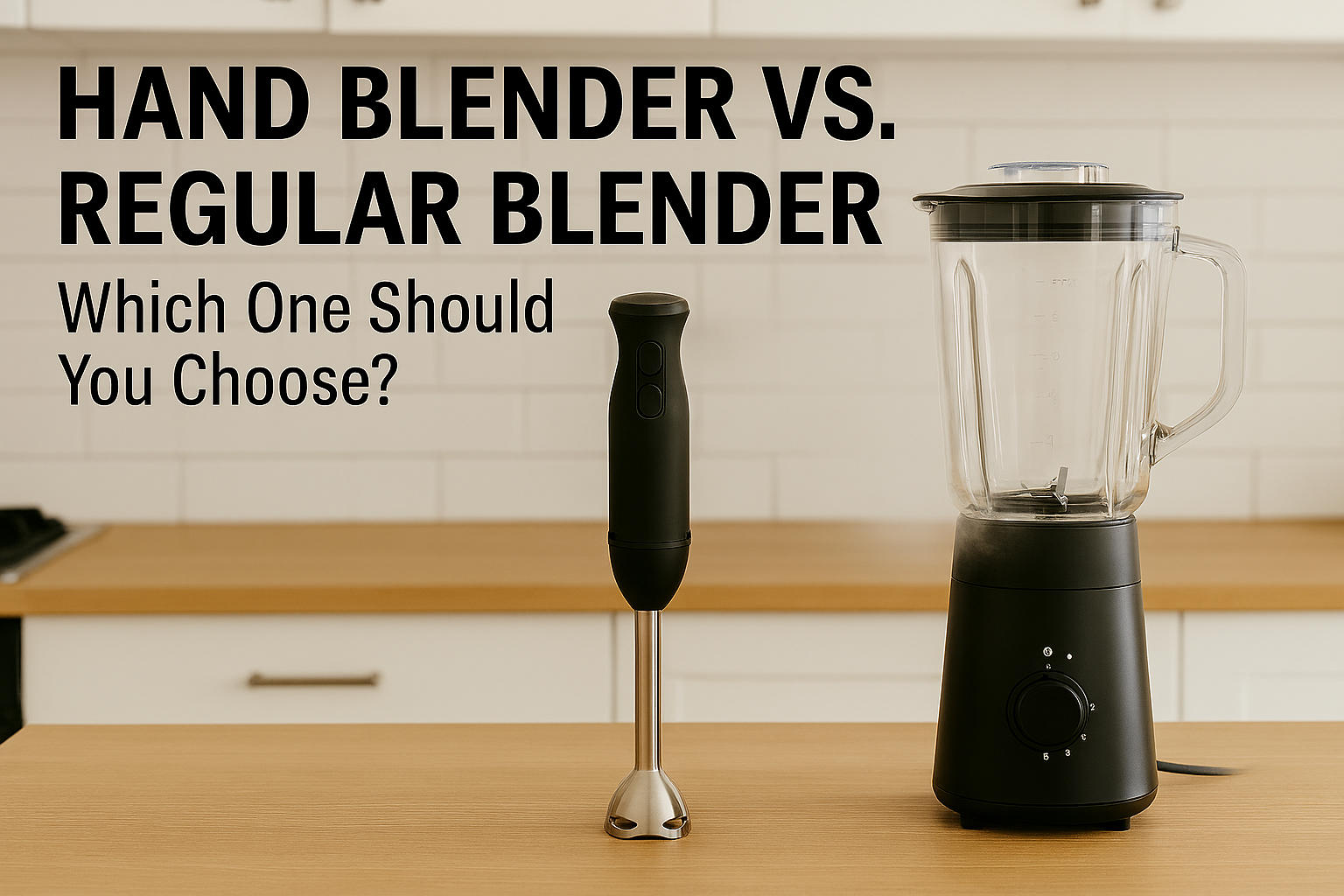
An immersion (hand/stick) blender is a slim, handheld tool with a metal shaft and blade at the end. You immerse the blade into the pot, bowl, or cup and blend directly where the food is — great for soups, small purées, and single-jar smoothies.
A countertop (regular/jug) blender is the classic motorized base with a jar (often 1–2 L) that you place on the base to blend. It is designed for larger volumes and tougher jobs like crushing ice, making smoothies for several people, and processing harder ingredients. Popular reviews and tests show these are the most versatile all-rounder in many kitchens.
Strengths and typical uses
Hand (immersion) blender — what it’s best at
- Blending hot soups and sauces directly in the pot (no transfer).
- Small jobs: baby food, single-serve smoothies, emulsifying mayo, light purées.
- Compact storage and quick cleanup — the detachable shaft washes fast.
- Good when you want fewer dishes and less countertop clutter.
Countertop blender — what it’s best at
- High-volume smoothies and shakes for 2+ people.
- Ice crushing and frozen fruit smoothies (especially higher-watt models).
- Making nut milks or coarse nut butters (requires powerful motors).
- Consistent, fine purees when you need smooth textures for sauces, smoothies, or blending batters.
Power & capacity — practical numbers to look for
Power determines what the blender can do. These figures represent common ranges found in products and buying guides:
- Hand blenders: typically 200–700 W for household models; higher-end sticks may reach ~1000 W for stronger jobs. Use them for soups, soft fruits, and small batches.
- Countertop blenders: commonly 300–1,200+ W. For crushing ice, frozen fruit, or making nut butters, aim for 700 W and above; premium high-performance models exceed 1,000–1,200 W.
Capacity guide (common jar sizes)
| Jar size | Best for |
|---|---|
| 0.5–0.8 L | Single-serve smoothies, baby food |
| 1.0–1.5 L | Daily household use, 1–3 people |
| 1.8–2.5 L | Larger batches, small shops or families |
Many popular countertop blenders sold in Nigeria come with 1.5 L jars; examples include local product lines with 600–900 W motors.
Which one to choose — quick rules
If you mostly make soups, sauces, single-portion drinks, or you have limited storage, choose a hand (immersion) blender. It’s faster for small, hot, or awkward containers and easier to clean.
If you make smoothies regularly, crush ice, prepare larger batches, or want finer texture for drinks and nut butters, choose a countertop blender — preferably 700 W+ for reliable ice/frozen work.
If you need both (and have space), a mid-range countertop blender plus an inexpensive stick blender covers almost every kitchen task.
Nigerian household & power considerations
- Voltage: check that the appliance supports 220–240 V (standard in Nigeria). Many local product listings state this explicitly.
- Generator and inverter use: hand blenders (lower wattage) are easier to run on small generators or inverters. For countertop blenders, high-watt models may require more stable supply and higher capacity generator/inverter. If you plan to run a 900 W countertop blender on generator, ensure your generator/inverter can handle the surge.
- Dust and heat: store blenders in closed cupboards when possible; dust can damage motors in dusty cities and markets.
Maintenance & safety (short, practical)
- Clean blades and shafts right after use; immersion blender shafts are detachable and usually dishwasher-safe on top racks — check the manual.
- Don’t operate a hand blender outside a container (safety risk).
- Let motor cool between long blending sessions to avoid overheat, especially in humid/hot Nigerian environments.
- For countertop blenders, avoid filling beyond the max-fill line and start at low speed to reduce splashing.
Brands & examples you’ll find in Nigeria
Local and regional shelves commonly list brands and models that cover both categories. Examples of widely stocked or locally visible brands include:
- Maxi — multiple countertop models often 600–900 W.
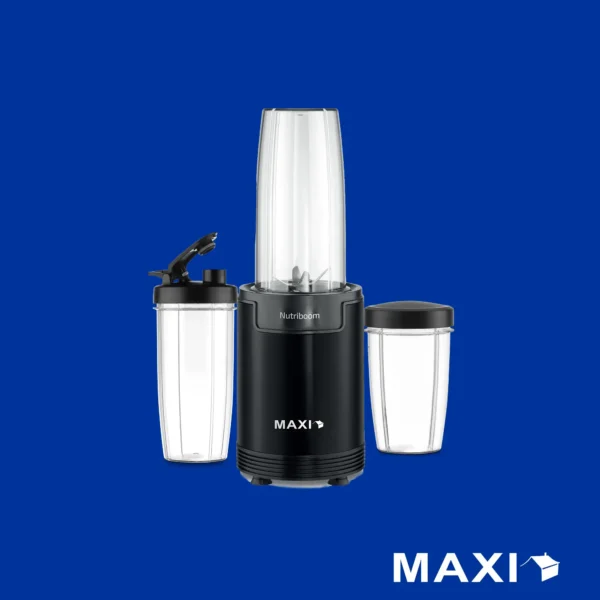
- Nutriboom — example 900 W models marketed for smoothie and ice tasks.
- NutriBullet — popular for personal smoothies (small jar, powerful motor).
- Vitamix — high-performance countertop blenders for heavy-duty use.
- Ninja — known for powerful countertop systems and ice crushing.
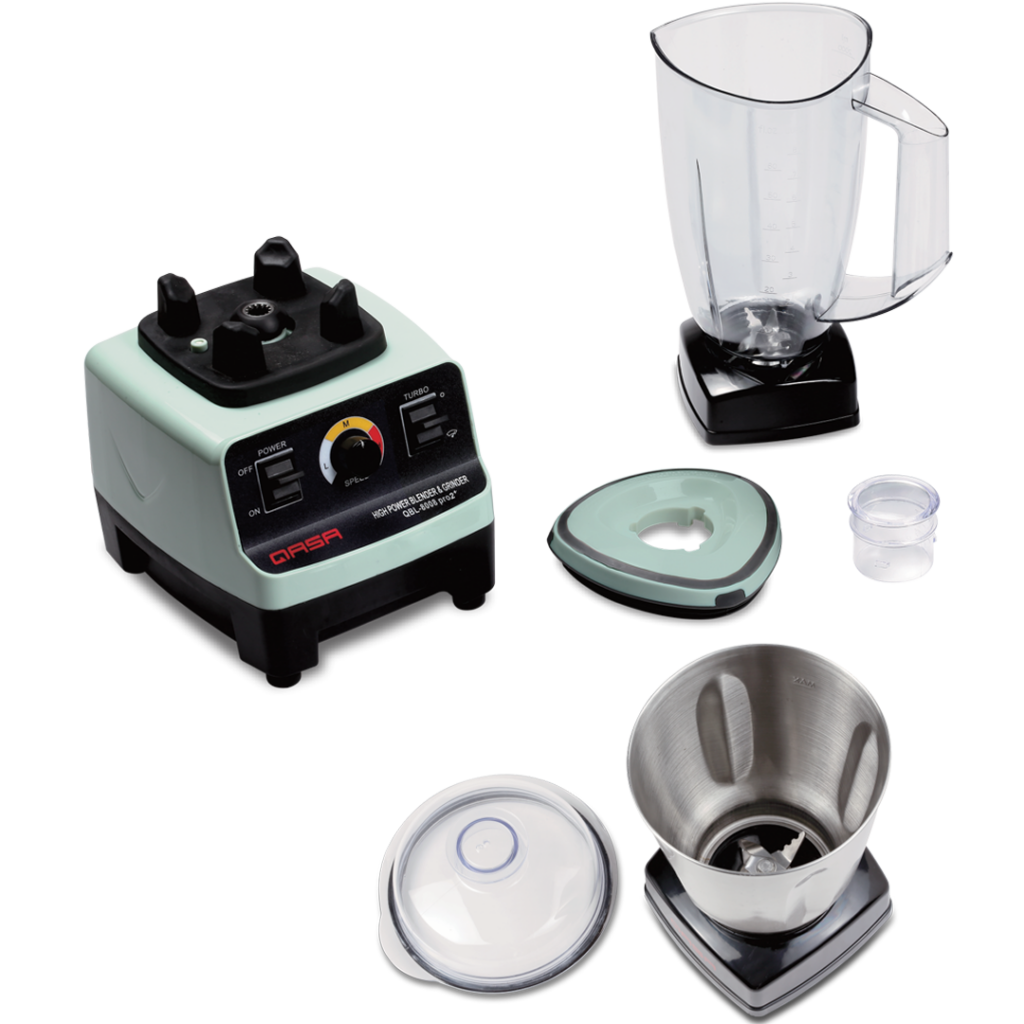
Blenders
Buying checklist — quick and practical
- Match power to purpose: 200–500 W for hand blenders and light jobs; 700 W+ for heavy countertop tasks.
- Check voltage rating (220–240 V).
- Look for detachable, dishwasher-safe parts to ease cleaning.
- For shops or heavy use, prefer metal shafts/blades and heavier-duty motors.
- Warranty and authorized dealer: buy from trusted dealers (like Dispasal) and ask for warranty card.
Short examples of “best for” scenarios
Home cook who wants fewer appliances: both — a mid-powered countertop plus an immersion blender covers everything.
Student in a hostel with limited space: hand blender for soups, shakes, and tiny jobs.
Small family making smoothies and soups several times a week: 1–1.5 L countertop blender, 600–900 W.
Small juice bar or frequent ice-based drinks: countertop blender 900 W+ or commercial-grade model.
New arrivals
-
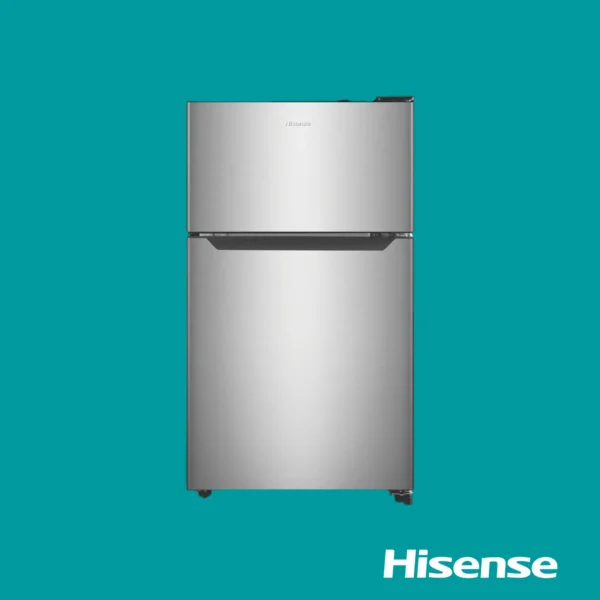
Hisense Top Freezer Refrigerator 87L (120DR)
Original price was: ₦205,000.00.₦195,000.00Current price is: ₦195,000.00. -
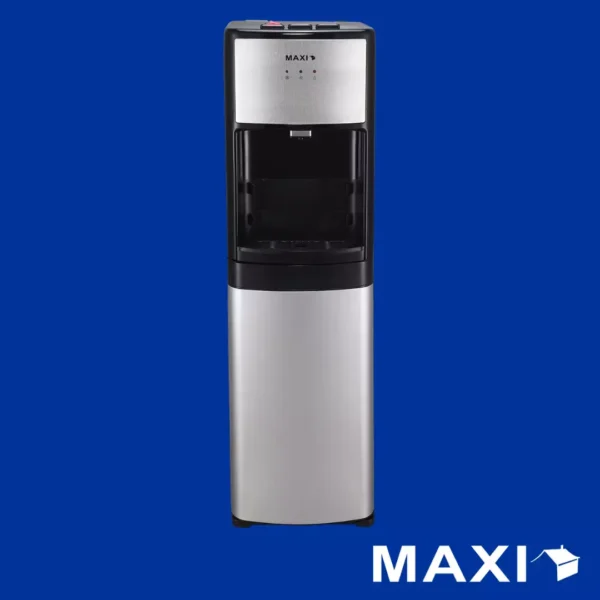
Maxi Water Dispenser Bottom Loading (1639S)
Original price was: ₦200,000.00.₦188,000.00Current price is: ₦188,000.00. -
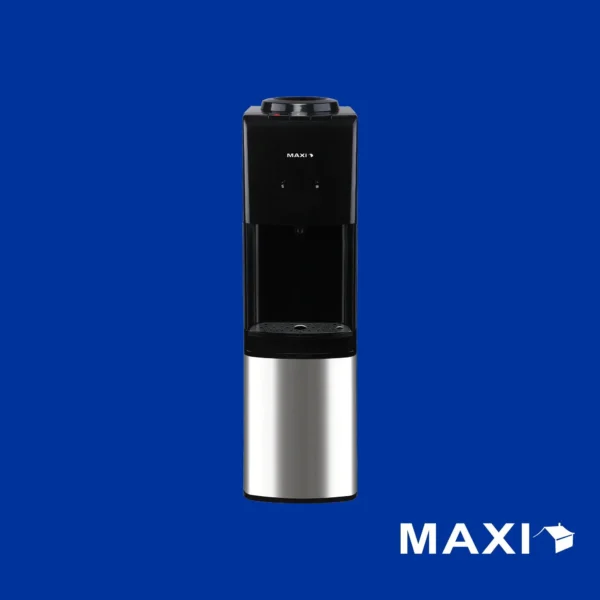
Maxi Water Dispenser – 3 Faucets (YL1242S)
Original price was: ₦115,000.00.₦105,000.00Current price is: ₦105,000.00. -
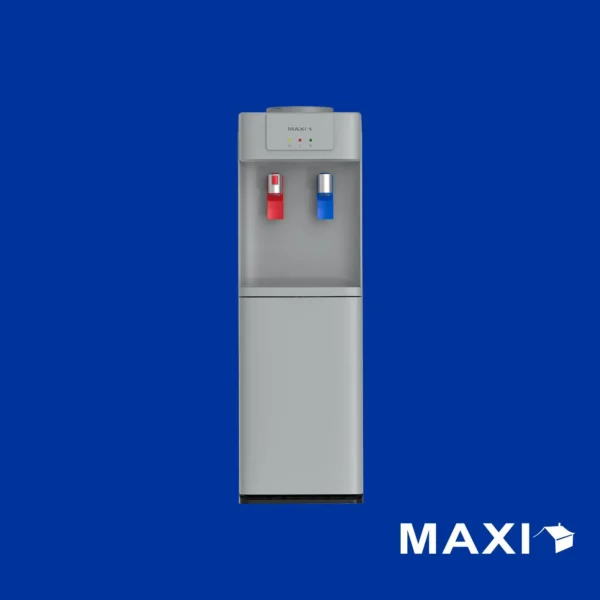
Maxi Water Dispenser – 2 Faucets, Hot & Cold (2435S-W)
Original price was: ₦140,000.00.₦120,000.00Current price is: ₦120,000.00. -
Hisense Air Fryer 8L 1700W (H08AFBK1S1)
Original price was: ₦90,000.00.₦85,000.00Current price is: ₦85,000.00. -
Maxi Toaster 2 Slices (2L17W2)
Original price was: ₦45,000.00.₦39,000.00Current price is: ₦39,000.00. -
Maxi Contact Grill (toaster) 1000w 1100PR
Original price was: ₦35,000.00.₦30,000.00Current price is: ₦30,000.00. -
Hisense Contact Grill (Toaster) 700w HSM701GCW
Original price was: ₦35,000.00.₦29,000.00Current price is: ₦29,000.00. -
Maxi Air Fryer 5L MF-TN50C2
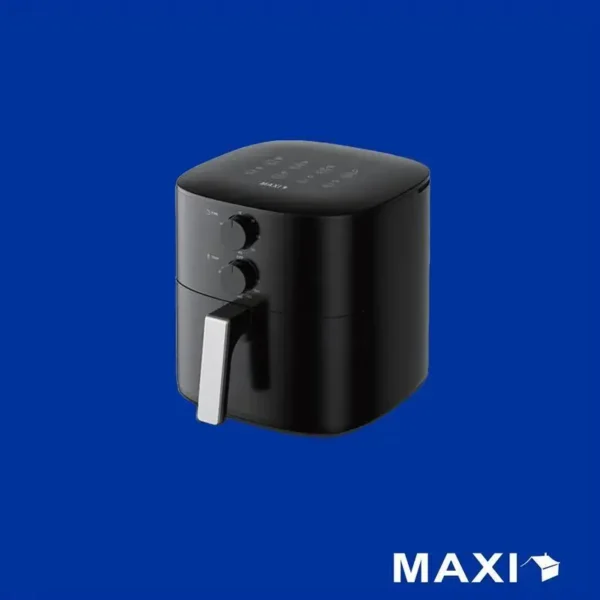
Original price was: ₦55,000.00.₦49,000.00Current price is: ₦49,000.00. -
Maxi Juice Extractor 500ml 400w
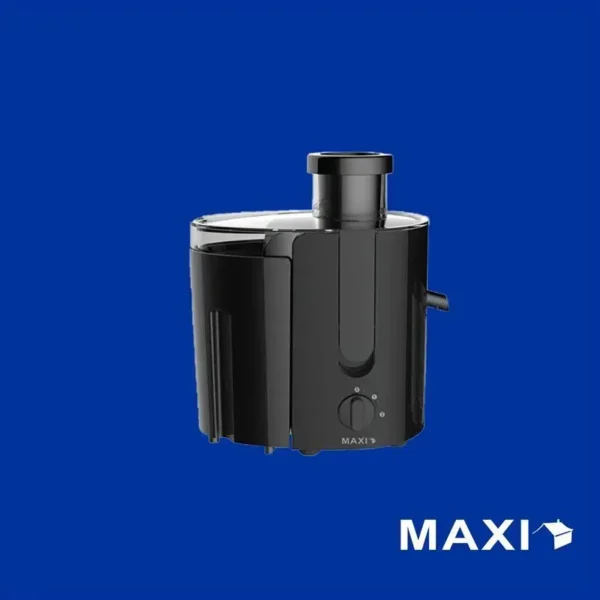
Original price was: ₦60,000.00.₦50,000.00Current price is: ₦50,000.00. -
Maxi Pressure Cooker 6L 1000w
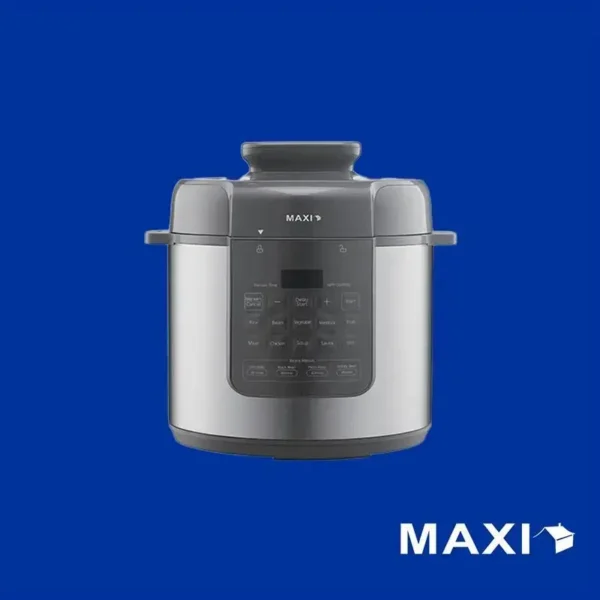
Original price was: ₦70,000.00.₦65,000.00Current price is: ₦65,000.00. -
Hisense Blender – 1000W, 1.5L
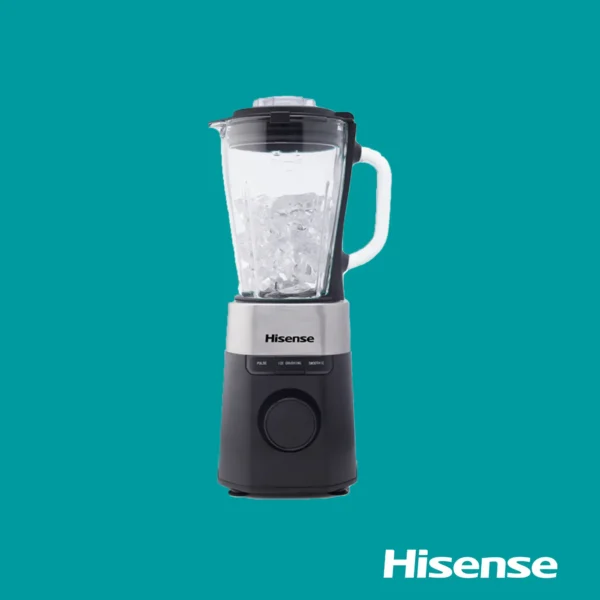
Original price was: ₦90,000.00.₦80,000.00Current price is: ₦80,000.00. -
Maxi Nutriboom Blender – 900W
Original price was: ₦60,000.00.₦50,000.00Current price is: ₦50,000.00. -
Maxi Air Cooler Fan 60W 15L (120-16AR)
Original price was: ₦120,000.00.₦115,000.00Current price is: ₦115,000.00.