







Why Your Freezer Isn’t Cooling Properly — A Complete, Expert Guide

Why This Matters A freezer that stops cooling well isn’t just annoying. It can lead to:
- Spoiled or unsafe food
- Higher electricity bills
- Unnecessary stress and repeated service calls
The good news: many causes are clear and fixable, and some simple checks can save a trip to the technician.
Below is a step‑by‑step guide to understand what might be wrong, what you can safely do yourself, and when professional help or replacement is the better choice.
How a freezer actually keeps things cold
Before we list the problems, know that every freezer depends on four main systems:
- Thermostat – keeps track of temperature and turns cooling on or off.
- Compressor – the engine that pumps refrigerant.
- Condenser and evaporator coils – move heat out of the freezer.
- Fans – circulate cold air inside and cool the compressor outside.
If any one of these fails, cooling suffers.
Common reasons why a freezer isn’t cooling
1) Thermostat set incorrectly
Sometimes the simplest cause is user error.
- If the temperature control is accidentally set too high, the freezer will never reach the proper cold level.
- The correct range for most freezers is about –18°C to –20°C for safe long‑term storage of food.
If your freezer is set warmer than this, adjust it first and wait a few hours to see if the temperature stabilizes.
2) Faulty thermostat
When the thermostat itself is damaged or misreads the temperature:
- It may not tell the compressor to run, even when the freezer is warm.
- Result: inconsistent cooling or no cooling at all.
Signs include the freezer being warm despite the dial showing a cold setting, or the unit running unpredictably. This typically needs part replacement, not just cleaning.
3) Dirty condenser coils
One of the most common, real‑world faults.
- Condenser coils, usually at the back or bottom, must release heat.
- If covered in dust, hair, or grease, heat can’t escape. The system overheats and cooling weakens.
- The compressor works harder, uses more power, and may fail sooner.
Fix: Unplug the freezer, then vacuum or brush the coils gently. Do this ideally twice a year—more often in dusty homes. This is a safe step anyone can take.
4) Compressor problems
The compressor is the engine of the cooling cycle.
If it fails or does not run:
- No refrigerant circulation → no cooling.
- You might hear clicking, very loud humming, or nothing at all while the contents stay warm.
Compressor faults are serious, often costly to repair, and not suitable for DIY. If this happens, professional assessment is required, and replacement sometimes becomes the smartest long‑term choice.
5) Condenser fan not working
The fan near the compressor helps cool the refrigerant.
If the fan stops:
- The compressor overheats.
- Cooling drops significantly even though the compressor might still be running.
Signs: very hot back panel, poor cooling, or the fan not spinning when inspected. Professional service is usually needed to replace the fan.
6) Damaged or weak door seals
Door gaskets keep cold air inside.
If seals are cracked, dirty, or loose:
- Cold air leaks out, warm air enters.
- The freezer works nonstop, uses more power, and ice may build up faster.
Quick test: close the door on a piece of paper; if the paper slides out easily, the seal is not tight enough. Clean seals regularly and replace if they no longer hold firmly.
7) Evaporator fan malfunction
This fan circulates cold air inside the freezer compartment.
If it fails:
- Some portions of the freezer feel warm even though the compressor is running.
- Food may freeze at the bottom but remain warm at the top, or the distribution is uneven.
This is common in both chest and upright models; professional help is typically needed to check and replace the fan.
8) Blocked airflow inside
Overloading or covering vents blocks circulation.
- If vents are blocked by too many items, cold air cannot move through the freezer.
- Result: uneven cooling, some food spoils, some items freeze unevenly.
Keep items organized and avoid stacking so tightly that vents or air pathways are blocked.
Safe solutions you can try yourself
These are practical, low‑risk steps to restore cooling, often without a technician:
- Check and reset thermostat
Set to proper freezing level around –18°C to –20°C and wait several hours. - Inspect door seal
Clean with warm water and mild soap. Replace if worn or loose. - Avoid overloading
Arrange items to allow airflow; do not block vents. - Clean condenser coils
Unplug, vacuum or brush gently. Do this at least twice a year. - Defrost excess ice buildup
If there’s thick frost, switch off, defrost fully, then restart. Excess frost blocks airflow and reduces cooling.
These steps often solve the problem if it’s not a deep mechanical fault.
When to call a technician
Some issues are beyond home fixes and require a qualified professional:
- Compressor failure
- Faulty thermostat control board
- Evaporator or condenser fan replacement
- Refrigerant gas leak
⚠️ Do not attempt to repair compressors, refrigerant lines, or electrical control boards yourself. This is dangerous and can cause fire, electric shock, or irreversible damage.
Pro tips to prevent cooling problems
Simple habits that add years to a freezer’s life:
- Use a voltage stabilizer or AVR in areas with fluctuating power.
- Avoid frequent door openings—especially during hot hours or storms.
- Clean coils regularly; defrost if the freezer is not frost‑free.
- Keep inside and outside surfaces clean.
- Follow the user manual’s maintenance instructions.
- Keep freezer roughly 70–80% full for best efficiency—enough mass to hold cold but not so crowded that airflow is blocked.
Final advice
If your freezer isn’t cooling properly, start with easy checks: thermostat, cleaning coils, inspecting seals, and rearranging contents. If issues persist, contact a qualified technician.
If your freezer is old or inefficient, replacement with a modern, energy‑saving model is often more cost‑effective over time than repeated repairs. You’ll save on electricity, reduce repair calls, and keep food safe.
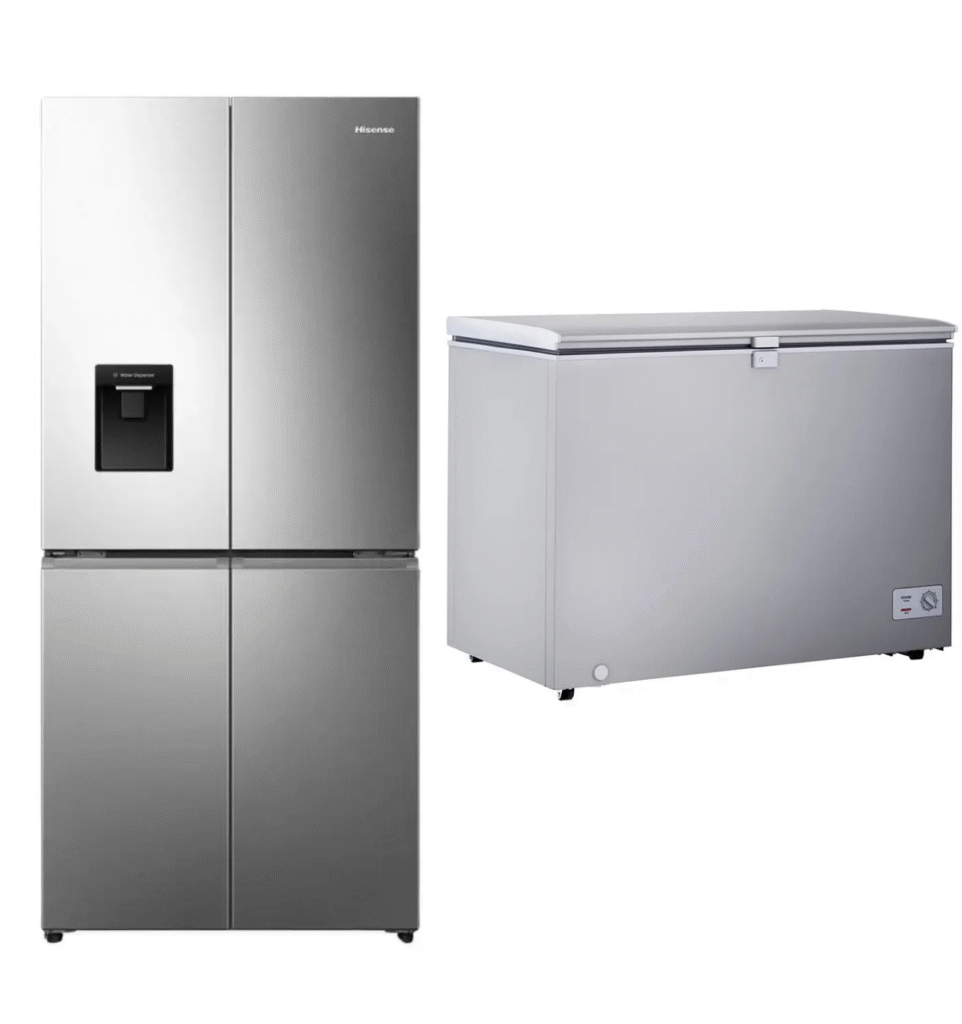
Recommended, reliable freezer example you can consider
Below is a strong, real-world option that balances capacity, efficiency, and availability:
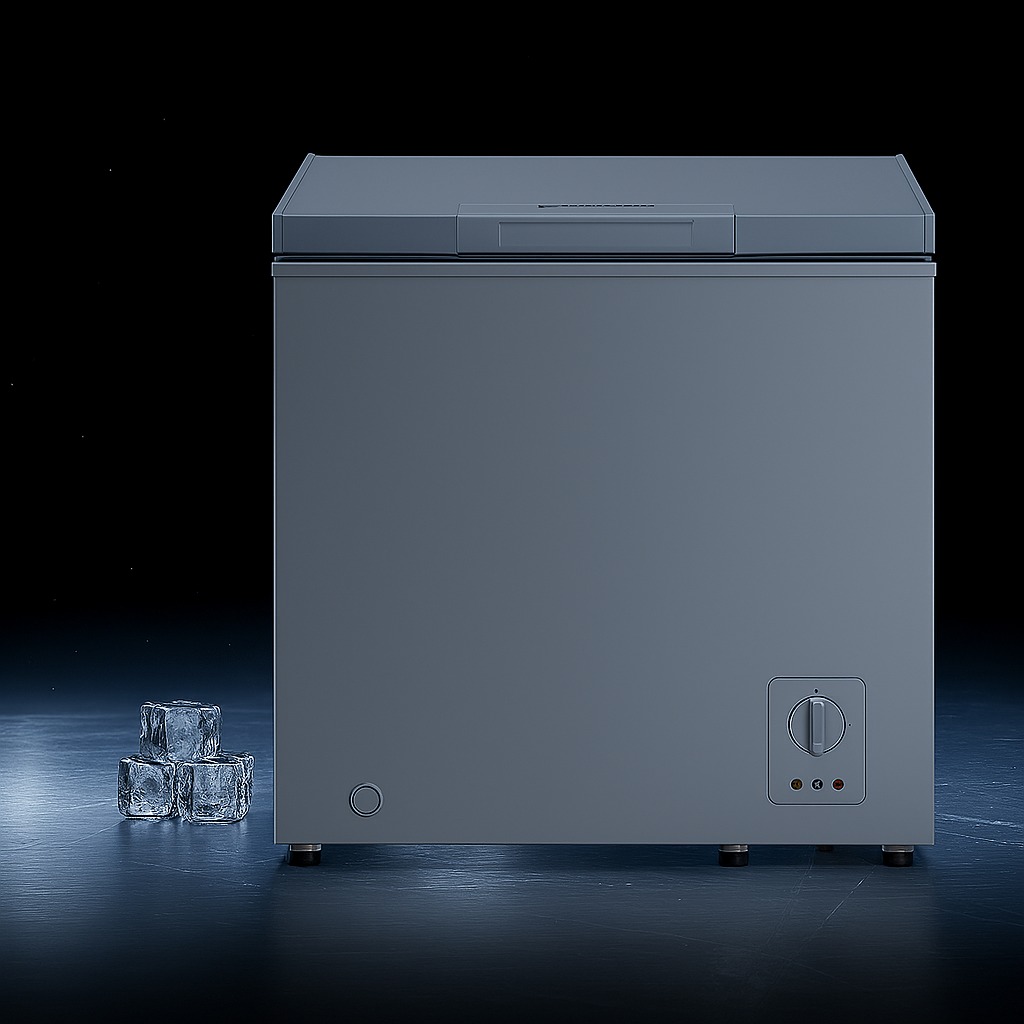
Hisense 297L Chest Freezer FC 390SH, Skyrun chest freezer BD260SH, and many others
Why this is a strong choice
- Large capacity at 297/260 litres for family or small business use.
- Energy efficiency: Hisense/Skyrun lists A+ energy class on this model line, reducing ongoing power use.
- Fast freezing capability and mechanical control, useful when storing large amounts quickly.
- Good power‑failure storage time: manufacturer specs for the same model family show up to about 42 hours of storage in the event of power failure, which is excellent for unstable supplies.
- Measured energy use: listed at about 0.975 kWh per 24 hours, roughly 356 kWh per year under test conditions, which is a solid guide for estimating ongoing costs.
Availability & value: listed with clear pricing and stock indications at reputable Nigerian retailers, making it a practical pick for those upgrading from an older or failing unit.
Where to get support or buy a new freezer
At Dispasal, you can find:
✅ Energy‑efficient freezers from trusted brands
✅ Replacement parts and accessories
✅ After‑sales support and technician referrals
✅ Guidance on the right size and features for your home or business